Showing posts with label social media. Show all posts

A is for Apple (Not the Fruit)

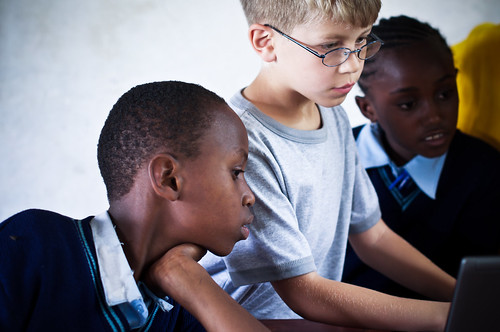
Earlier this year, I read an article about a recent study that showed kids between the ages of 2-5 are more likley to be skilled in in the ins and outs of a smartphone, than they are with the ins and outs of tying their shoes, which in past generations was a learning/development milestone.  So when I saw this image this morning, I chuckled. Signs of the times!! How ancient our childhood joys must now seem!

The 2011 method for teaching kids their ABCs?

The Evolution of Evaluation...or is it?

On 21 April 2007, GlaxoSmithKline started a communications revolution when the pharmaceutical giant became the first company listed on the FTSE 100 share index to send a tweet.

Eight months later, on 5 December 2007, Carnival Cruises set sail on its Facebook adventure, becoming the first FTSE 100 company to establish a presence on the social networking site.

Today, 67 members of the FTSE 100 index are actively engaged in social media.

three [d] Digital and Social Media, www.threepipe.co.uk

In an earlier blog entry, I decided that PR evaluation is often overlooked in theory and in practice and thus came my topic for my Master's dissertation. Organisations are using public relations (PR) as part of their “problem solving and change processes” (Broom, 2009, p. 285), and while many practitioners are implementing a myriad of campaigns by which to do this, there is still widespread debate about PR, and its effectiveness and value from a business perspective.

Amidst the continuing debate about the evaluation of PR, the rise of new media technologies, notably social media, offers a new challenge to PR practitioners as it relates to evaluation. Many trade associations such as the CIPR, the International Association of Business Communicators (IABC), the Public Relations Society of America (PRSA) and the Association of Measurement and Evaluation for Communication (AMEC) have consistently been asking the question, “How do you get started in measuring social media and what are the relevant metrics?” (CIPR, 2011).

My study will explore what PR practitioners across the FTSE 100 companies expect to achieve by integrating social media into their ongoing programmes and campaigns, and more importantly, how well they evaluate these objectives and what are the prevailing metrics, methods and tools used across the industry.


I have already had the opportunity to interview a few PR practitioners from large UK companies and gained some fantastic insight from them. However, I am still looking to deepen my understanding of how social media evaluation is being carried out by PR executives in the UK. 


I am hoping UK-based PR practitioners will be willing to assist me in my research by agreeing to a short interview. The interview should not take longer than 45 minutes, and I am more than willing to meet with you at your office or a location convenient to you, or alternatively interview you via telephone.


I can be reached via email at avianeh@hotmail.com, and you can also find me on LinkedInI genuinely appreciate your time and willingness, especially in light of professional commitments.


Thanks a lot everyone, for your support and assistance! 

----
References cited:
  • Broom, G.M. (2009) Cutlip & Center’s Effective Public Relations, 10th edn. New Jersey: Pearson Education Inc
  • CIPR (2011) Social Media Measurement Guidance. Available at: http://www.cipr.co.uk/sites/default/files/Final_Social_Media_Measurement_Guidance%20_March_2011.pdf (Accessed: 2 April, 2011) 

How Do You Measure PR?

PR Measurement is critical and not an option!
I have found recently that in doing assignments, with limited word counts, that one of the shortest sections, if not the shortest section is usually the Evaluation and Measurement section. Much goes into the strategy and tactics sections, with details going into the appendices, but the poor Evaluation section suffers.

In real life, it shouldn't and it is the reason I have decided to look at PR measurement, specifically social media in PR measurement for my dissertation. Evaluation is nothing new, but with all the buzz about social media, all the hype and gloss, many people are interested in the question - how do we measure this thing? I am interested in it.

Advertising Value Equivalents (AVEs)
have no place in PR measurement
There are still so many nebulous areas where measurement is concerned and not enough standardisation. PR Week recently announced it would not considering AVEs as a measurement criteria for its annual awards. The Association for Measurement and Evaluation of Communication (AMEC) has also been steadily campaigning to do away with the AVE as a standard for PR measurement.

Evaluation and measurement of PR is nothing new, so why has the PR industry taken so long to make its own mark on evaluating what it does, rather than using metrics from other disciplines as a benchmark? And like my assignments, why do we shy away from research and evaluation, while paying a great deal of attention to tactics? I would think that one would lead to the other and to the other - A to B to C.

And now with social media, which may still come across as fluffy stuff to some senior executives, that we have now really been focusing on proving its value and showing how it can be evaluated, the whole question of measurement of PR in general seems even more critical. The Barcelona Declaration of Research Principles was released in June 2010, and for the PR industry, it is a good first step:


  1. Goal setting and measurement are fundamental aspects of any PR programme
  2. Measuring the effect on outcomes is preferred to measuring outputs
  3. The effect on business results can and should be measured where possible
  4. Media measurement requires quality and quantity
  5. AVEs are not the value of PR
  6. Social media can and should be measured
  7. Transparency and replicability are paramount to sound measurement.


So it is in honour of my abbreviated evaluation sections over the past few months, and out of a genuine interest to see what my peers are doing in real business cases, that I will be pounding the library and the doors of industry to find out, what are we doing, how are we doing it in terms of PR/social media measurement.

Lights. Camera. Fashion. And the evolution of media relations

Photo credit: AP Photo/Andrew Burton via Yahoo News
Hair. Makeup. Couture.
Press. Publicists. Bloggers.

New York Fashion Week is on and what I love about this is how the media landscape has changed from a few years ago to what it is now. Social media has changed the face of media relations across the PR industry. Gone are the days when having a by-line in a newspaper made you the most important dude to a PR exec. Now with a laptop and an opinion, you can catch the attention of PR teams, whose eyes now have to scan new forms of media to gauge opinions about their brands and to build their brands.

Photo credit: Reuters/Eric Thayer via Yahoo News
I love that Tumblr has sent 24 of its fashion bloggers to NYFW. Just regular people with a love for fashion, who have a great following and who have the power to influence their readers.Great strategy for Tumblr, which is a favourite platform for photogs and fashionistas.  One of their Tumblrs is only 16 years old - from Devon, England. She will be rubbing shoulders with Oscar de la Renta and top fashion editors, and "reporting" live from one of the premier fashion events in the world. A 16 year old can open up the world of high fashion to an audience that may yet be untapped by traditional media. It's pretty damn awesome.

Media ownership now goes way beyond conglomerates. It lies in the keyboards of the citizens of the world. Media relations strategies now have to include and consider social media influencers in promoting the personality and image of the brand - making brands so much more accessible to so many more people. It's really fantastic how quickly things have changed.

I regularly follow one of the 24 Tumblrs - Jessica Quirke - and she is having a remarkable experience. She and the 54,000 people who follow her religiously. Amazing.

Valentine's Day - 2011 style

I found this great video by the always great Socialnomics, and it was too cute not to share.


Also a rewind to the past.

Return of a PR Superstar

I must first apologise to everyone for being such a bad host. I have been beyond busy and the blog was a victim of my new life.

But I promised that 2011 would see me doing much better so please accept my apologies and give me another chance!

I guess I should tell you that I am now a full time Masters student in London - in what else? Communications (with a lot of Marketing as well). I have been here since September - hence the date of the last post. It has been a maddening pace. Maddening. The transition from corporate lush to library-beating student was not that traumatic - mainly because I was not a corporate lush. Part of any good employee's job function should be to constantly stay in the loop with the latest trends and developments in their field. This blog allowed me to explore some of these trends and to meet people who allowed me to see what they were doing in their roles, in their countries. So getting into a formal setting where we were being taught about what's happening - not that much of a stretch.

I have been learning a lot and often, contributed much more. Having job experience - and not just summer job experience - but considerable and hefty real-life corporate experience, has made this even more illuminating, because you can start applying stuff in your mind to real life experiences.

It's almost dissertation time and I am leaning towards a dissertation on sponsorship, but being the social media maven that I am, I want to maybe look at it from that angle. Suggestions?

My 2011 resolution is to be a better communications blogger. That sentence in itself is a bit of a contradiction. By way of being a communicator, this should be a non-issue. But sometimes life just gets in the way. I hope to see you guys more often this time around.

Happy New Year and welcome back to me!

This Time for Africa

One month, 64 games and 145 goals later, the world's biggest event is over. Dry those eyes and pack away those vuvuzelas because you have to wait another 4 years until the next one. But what a World Cup it has been. I think this tournament will be one that will be remembered for years, for a variety of reasons - footballing and non-footballing reasons.

But I think as the sun goes down on this World Cup, South Africa can be duly proud of what they have achieved as host and as a country. The hosting of this tournament for not just South Africa, but the entire continent of Africa has been a marketing and rebranding coup. Two years ago, FIFA President Sepp Blatter said
“People don’t want to trust Africa. That is wrong. Africa has given so much not only to football but to the whole world. Someday, something should come back. So let’s have this World Cup. Let’s celebrate Africa. Why not?”

And celebrate we all did. Even though popularised by a Colombian singer, the strains of "Waka Waka" and its tag line "This Time for Africa", continue to filter through the airwaves, leaving it as probably one of the most popular tournament anthems ever.The world has looked to South Africa over the past month for great football, but got more than they bargained for in the artistry, passion, energy and dare I say, unity of its people.
This game allowed Africa to showcase its beauty and the remnants of Apartheid regime, to the outside world, which seems to have no idea how bad things were and that there is a better side of Africa(beside tribal wars and starvation) which international media—for its own convenience ---tends not to focus on. - Ghanaweb

Whether the powers that be will leap on the momentum which this World Cup has generated and leverage all the positives into effecting socio-economic change is another story, but well done South Africa.

And without a doubt, this tournament's immense public appeal and attraction was heavily invested in the fact that we had greater means to communicate, participate and enjoy the tournament's various facets. World Cup 2010 was supposed to be the social media World Cup and boy was it ever. Information, debates, opinions, replays - all available at the click of a button, whether it be on Twitter, Facebook, Youtube, the obsessed and the curious all found a way to be part of this global phenomenon via this global phenomenon. Sponsors and pundits alike milked it for all it was worth, tapping into the enormous audience primed to receive messages.

Twitter reported that the World Cup or #Worldcup resulted in a record 3,283 tweets per second as opposed to the regular average of 750 per second. The fail whale was almost as recognisable as Paul the Octopus, because of the barrage of tweets around the tournament. Social media has truly revolutionised the way we love the game, and the way the host country was marketed to the millions who could not make it there to see the games live.

At the end of it all, though Spain were crowned the best team in the world, the real winners were South Africa and social media, and all the people who joined the revolution to make this one of the best tournaments the world has ever seen.  Brazil 2014 has some rather big shoes to fill, but I think they can do it. In 4 years, this phenomenon may be bigger than any of us can ever have imagined.

Runners up: Paul and the vuvuzelas.

Licence to Kill. Licence to Tweet.


Even with the football fever gripping my senses, I am still aware that the world is not a giant football revolving around the sun.

The news headline on BBC news that morning was "Utah executes convicted murderer by Firing Squad". I have a host of other issues with this story but one of the most talked about aspects of it is definitely the tweet heard around the world.


Many people felt the tweeting of the death of a man, albeit a cold blooded, clearly sadistic murderer, to be grotesque at best and inappropriate. Mr Shurtleff says he believes in an informed public and he continues to "use social media to communicate directly with people".

I do agree with him there. Social media has changed the way we communicate and can really bring us closer to our various publics. But even though I am an advocate for social media, I always contend that sometimes we get so caught up in the hype that we forget the basics. I did not think Twitter was the best place to tweet about this and maybe that is my own moral perspective. But I also don't think Mr Shurtleff should be left to his own devices with Twitter. I really believe he needs a Twitter intervention because looking at this single tweet in a vacuum does not begin to demonstrate the fact that Twitter is a powerful PR tool, which in 140 characters can make or break one's image.

I was a bit taken aback by the lack of tact here. It's almost like he could not wait for the guy to be pronounced dead so he could have his 5 minutes of fame.


The AG would do well to think before he tweets, especially considering the very public office he holds, for while verbal comments may not always be picked up, tweets are forever. Yes, you may want to publicly defend your stance on "death by tweet" but berating your followers? Really?


And calling them whiners? Who is this dude's media adviser? Someone needs to hide his laptop and his smartphone!!!


I am after all this, slightly amused by his Twitteritis, and sincerely hope he gets help. And while we use social media for communicating news and important messages, as with everything else, some messages may require different vehicles for safe passage. There are also issues of what is and isn't appropriate for social media and these are questions that many of us may have to consider in the future. I mean, you never know what may be next!


Election 2010: Cyber Police

I have been observing what's been happening on the cybersphere for the past few hours. I posed this question to a colleague last week and I still do not have the answer, but the question relates to the excerpt below:
I am advising the public that they are to seek information on what they can and cannot do on election day and ensure that the law is adhered to,” (Ag. CoP) Philbert said, adding that absolutely no campaigning will be allowed next Monday and his officers will be out in full force to ensure breaches will be detected and met with the full brunt of the law. - Newsday

I consciously chose my shirt today based on what I have always known as a very serious legal issue - campaigning on election day. Be it on the streets, or via the media, it has been a no-no for as long as I can remember. Though I was not totally certain whether it is indeed a transgression, I did not want to somehow be barred from voting because I wore a party colour. However, is anyone policing social media, because from where I sit, I have seen some questionable things. And if the parties have used social media to campaign all throughout the campaign, then in my view, doing it today is just as illegal as doing it via traditional means. I saw one newspaper place a disclaimer saying it would delete any comment which went down this road, and that is indeed commendable. But while the TTPS are out in the 41 constituences to prevent this from happening today (in addition to cracking down on election bootleg alcoholic drinks) who is policing the web today? It may be new - this whole social media thing and how it impacts our elections and our laws - but it's worth clarifying.

Friday Fun: Must-Tweet TV


Like all social activities, television-watching demands compromise. People may have strong ideas about what they want to watch, but what they really want to do is watch together. - The Economist

I am a huge Grey's fan. So are my friends. We don't get to watch it together. But we watch it together. Chirping Blackberry phones, FB status updates and comments, tweets. The experience of watching tv with friends all across the country and around the world has the ability to create an almost cult-like experience, in real time and in post-time. You can collectively cheer, gnash teeth and cry because you're connected and it no longer is a solitary experience with you and your ice cream. It's that whole communal element that made tv so popular in the first place.

NBC recently revealed its new social initiative on its MyNBC platform. ABC, which is the network which created Grey's Anatomy needs to get us on board!!! Ah. No need to get off the couch and go anywhere. And though we don't get Hulu videos here, the idea of social tv is one which works for this generation of social networkers who love tv and who live for exciting season finales. I thoroughly enjoy sharing my fave shows with friends who feel the exact same way about the show, because it's not the same when your husband or boyfriend is forced to watch it with you because of blackmail. It's just not the same.

Does the lean-forward expe­ri­ence, inter­ac­tiv­ity and backchan­nel chat­ter of social net­works have a place in the tightly con­trolled, lean-back world of tele­vi­sion? - JD Lasica

The answer is a resounding yes!

Real Case: Perils of Small Business BEING Online

Now we all understand the importance of customer service and the importance of customer service training for staff. Customer service is usually one of the tenets of a strong brand and it has the power to set the brand apart from its competitors. I have had my fair share of excellent customer service and horrendous customer service here in Trinidad and Tobago. One bad example was when a waitress used the F-bomb to vent her frustration when SHE messed up my friend's order and she felt she needed to tell me I was F-ing confused. I did not bother to order anything after that. I did go to the manager and tell him about the encounter and his response, or lack thereof was alarming to say the least. In fact I think he was drunk.

Now yesterday I shared my opinion on why small businesses should be online. But while we do create a website or a Page or a Twitter channel, we cannot forget that how we interact with our online communities also constitues as customer service. Social media channels such as company Twitter pages and Facebook Pages allow brands to not only promote their brand, but they also use it as a conduit to deliver assistance to their customers.

In larger organisations, the communications and promotion either lies with a marketing or communications team or individual as the case may be, who usually have the skills to properly manage feedback and concerns. In the small business scenario, this is not always the case and it may be the owner or an employee. Here is an example of a social media admin gone wrong.

While service browsing recently, I came upon a Facebook Page for one fitness provider, where the customers were miffed about an unexpected and immediate price increase for membership. This was the first response from "management". I am posting it as I found it.
well we didnt even no until the day it was raised, but come on its only by $50.00 come on. its still a good rate and plus all d classes r for free, where else u gettin dat?...please, ok. where u gettin dat? yes we shld of let eveyone know in advance...but it has been done already
Shock does not begin to explain it. Of course subsequent customer responses were not conciliatory. The second response, from the second admin was:
I understand your dismay with the sudden change of membership rates. I apologise for this.  We take note of your suggestion for more notification and will bear this in mind for future operational/organizational changes that will affect our members. The rates for the first quarter were an introductory rate as is customary for all new goods and services in a developed and competitive market. However, you will notice that with the increase in rates, we have also increased the number and availabilty of classes, the increase in the floor space as well as the continuing increase of equipment and machinery. So while you may not benefit from class participation, there is and will be more and a wider variety of equiment available for your use. Again I do apologise for any issues that may have arose due the change of rates, but we do hope you continue to support (company name)
1. Customer service goes beyond frontline staff. It applies to everyone, in every department, across all functions and via all media, be it in a physical setting or virtually. Clearly the second response was a more measured and professional response, balancing the apology for the price increase with the benefits which the increase brought with it. I can appreciate that response more than the combative, not to mention, linguistically challenged reply up top. The danger they faced was that customers could have taken this poor customer service to the masses with the click of a mouse.

2. I am becoming more and more convinced that some organisations still view social media as "something else we can do" and not as a real, and powerful marketing tool. I swear, between this and some of the other local social media sites I have observed, it's almost as if they just asked the office boy if he had a Facebook acocunt and told him run with it. Social media just cannot be taken for granted and if you're going to be using it for your small business, then don't short change yourself.
  • Learn about the tools.
  • Invest in training your staff to use them effetcively and in a way that builds, not destroys your brand
  • Value the tools and what they can do for your business.
It is vital to hire, train, and monitor customer service employees. Each must understand what the brand is about, why their interactions with consumers are important, and what is expected of them - Augie Ray

And if your brand is now on the social media path, the same applies and is more important than ever!

The Perils of Keeping your Small Business Offline

Yesterday I tweeted this question:

So, is it?

I was actually trying to find a caterer for an event I am planning, preferably one closer to the event, and it has been an ordeal. Clearly a lot of small businesses are not online and this is worrying. I had to eventually resort to emailing friends for recommendations or suggestions and ended up calling a few of the options. Quite frankly, I find this tedious. I am online most of the time, so it is easier, not to mention more convenient to do a quick Google search, locate a website and then email the person. Or at least the website would have enough preliminary information that when and if I do call, I am not in a state of utter ignorance and I am a bit more informed and persuaded to make a positive consumer decision.
There are a lot of small businesses out there and I applaud this. I think it is great when people follow their passions and make their dreams of having their own business a reality. But really...gone are the days when you printed flyers on coloured paper and left them on office coffee tables and on lightposts. Why don't you have an email address for your business? This is not at all a winning move!
When I called the caterer that sounded the most promising, she asked me for my email "number"...wow. Then when I finally got the email, it was from her friend's email address because she did not have an email address, and the friend's address was sketchy at best (something along the lines of sweetreds@domain.com). A total fail.

Funding agencies for entrepreneurs should be equipped to assist small business owners with the information on these basics and why they are so important. While a start-up may not be able to afford a snazzy website off the bat, Facebook Pages have now made it easier to get yourself an online presence. Too easy. Way too easy. So, why aren't you online, and why should you be?

The internet is like the Yellow Pages - I only use the physical yellow pages when I am on the road and cannot get through to the operator. For everything else, I turn to Google. Millions of people feel the same way, so if you're not online, you're almost non-existent.
Visibility, credibility and promotion - It's all well and good to have people know you via a friend, but you can really establish your new brand with an online presence, which can take you from the lightpost to the masses with a couple easy steps and great content. For my caterer friend, if your menus are online, I don't have to wait for your friend to email them to me, or worse...fax them and hope it's a good copy.

Online orders/online business - There are those who have not seen a physical cash register in years because they live by online shopping/ordering. Don't limit yourself and lose the opportunity to bring in some extra business.

Analytics/Feedback/customer suggestions - How many people are visiting your site? Who are they? Where are they? This kind of information can help you market your business and develop new ideas to meet the needs of the people who have shown an interest in what you're selling. Additionally, you can get a lot of great feedback from customers which can assist you in fine tuning your products/services.
Not because you're operating out of your kitchen, should it mean that your marketing efforts should fall by the wayside. It's more important in the start up phase to establish yourself and get your business name, your services, your contact info etc out there to prospective customers. Your online presence is part of your calling card - it gives you greater legitimacy and greater visibility. And please...

  • Have an email address that identifies your company - sweetreds@domain.com is not it. Use your company name to identify yourself electronically.
  • Ensure your site, your Page and your website, are professional and cover the areas that a prospective customer may be interested in.
I am left holding a copy of a menu that leaves me a bit cold, and will have to now call her back and make suggestions. That is, if she answers the phone, because on my first attempt she had forgotten her phone at her aunt's house and the aunt had to take a message and have her call me back a couple hours later. If there was an option, where the business was already online, with a more convenient communication channel, then she would surely miss out on my event and my business. Don't make the same mistake.

Photo credit: www.freewebsitetemplates.com

Zeroing in, or out...on your brand

When Twitter zero'ed out last week, lots of faces crumpled in anguish, in sheer terror because the legions of followers they had built up over the past few weeks, past several months were suddenly gone, leaving them in an empty room, with no voices, no chatter, no hero worship. Among these were the brands who had painstakingly set up fancy Twitter pages, all nicely branded and boiler-plated. Luckily for all of them...us...it was a temporary glitch and in no time at all, the world had righted itself and following and followers had been restored.

But what if it hadn't? What if Twitter had screwed up your online "popularity" forever? What if you had lost all your followers - all those people who reached out to you during the day asking questions, retweeting your links, #FF-ing you? Would you have survived?

And more importantly for brands, do you have any idea who these people are? Now chances of knowing them all, may be slim to none. But is the rapport with them strong enough to withstand a crash such as this, and make them come back on their own, without you having to sit at your desk, trying to remember their Twitter handles?

It's something to think about isn't it? One lesson brands can learn from this is to not put all their social media energies into one social media basket. Some folks love Twitter and that's the extent of the relationship, but as we saw last week, it can be doom for the one-way brand. It's not an excuse to now go out and populate the SM universe. Be practical and relevant and go where your audience is sure to be. Be practical if you're a one-man show and it's just you managing social media.

But the other question coming out of the Great Zero is...

Would you have been able to keep on going without them?

There are some who have relied so heavily on social media that perhaps the traditional forms of engagement and communication have taken a bit of a hit. So on a day when the technology hits the skids, are you prepared to keep it going without missing a beat? Have you managed to create a synergy with your online tools and your traditional strategies to build a loyal offline community?

I often wonder where I would be if one day I lost my old phone (not a smartphone, so I guess it's a dumbphone), chock full of email addresses, phone numbers and texts with important info - all of which, sadly, is saved nowhere else. I think about a life before advanced mobile technology and how my telephone book was just that - an actual book, and I could rattle off numbers without blinking because I did not have mobile phone books to depend on. Now, with maybe the exception of my mother's mobile number and those of a couple close friends, I am just terrible with remembering data like that now. At the same time however, I am not limited by emails and tweets when it comes to my real life relationships. It makes it more fun, more convenient, yes...but it does not beat going out in the real world.

So really the question is How else are you building your brand?

  • Is your website a hot mess because you have sold your soul to Facebook and Twitter?
  • Do your followers know how else to find you, i.e. via your website or other platform, or do they think your Twitter URL is your...well...your URL?
  • Is your non-virtual frontline customer service below par because you are a Twitter customer service superstar?
  • Have you done away with in-depth articles or blogs because you've got 140 characters?

It seems ludicrous but it's a serious question - one which we all should be asking ourselves because at the end of the day, these are merely tools and not the whole enchilada. If the basket of eggs should fall, would that be the end for your strategy?

Law and Order: End of an Era

When the news broke that NBC was going to actually cancel Law & Order, there was a gasp heard around the world. Yes, when the show lost Jerry Orbach, and to a lesser extent Benjamin Bratt and Jesse L Martin, it was disappointing, but it rallied. The great thing about the show is that its appeal was in large part to the compelling storylines and cases. The fabulous actors who brought the varied and complex characters to life were icing on the cake. I admit that I often missed episodes because of fatigue or life, but that's why we love online re-runs.

The show has not been given the opportunity to hit a 21st season, to beat Gunsmoke, with which it is currently tied for longest running drama series. Oh gosh, NBC...are you that grudgeful? The show is one of the best, and most intelligent shows on tv, but thanks to the power of the advertising dollar, it has fallen victim to the cancellation knife.

But loyal fans have turned to social media to make a last ditch attempt to save the long running police/legal drama. I don't know if they can rally enough support to convince NBC to give the cast and crew one more year at least, but it's worth a shot. It's one time where I really am rooting more than ever for the power of social networks and the booming voices of online communities.

Join the L&O movement.

Yes. I  was one of those who gasped. It's just one of my fave shows ever!

Unmasking the Faceless Consumer: The Importance of Relationship Marketing

I take my car to be serviced at the same place every 10,000km, not because they're cheap, because they are not. I go there because of the relationship and the after sales service. Last year, when my radiator did embarassing things on the highway, not only could I call my service company after hours, but they saved me the expense of double towing and sent a guy to my house after work the next day to replace my radiator. To say this was excellent and convenient would be an understatement. And as a woman, who is on the road a lot, the safety and reliability of my vehicle are doubly important, so this type of personal service is a bonus to me.

Sadly, not a lot of organisations understand that there is a person behind the dollar bills which come with a sale. They take your money, and send you on your way with a sense of longing and undone-ness. It's little things like follow up calls, after sales service, seasonal greeting cards which can make or break the relationship your customer chooses to have with your brand. I was pleasantly surprised to go to my bank one year on my birthday and have the teller wish me a happy birthday and give me a cute, albeit generic branded card. But it was the thought and the consideration that set her apart from her sour-faced counterpart in another bank and kept me loyal.

Now you also have  social media, which in its essence is about getting to know people, how brands use it to manage relationships is an issue which can also set one brand apart from the next.

A lot of brands are using social media to drive sales and let's face it, this is the world we live in. We are constantly searching for new and innovative ways to raise our brand's profile and increase consumer behaviour, and social media has been a catalyst in many instances for doing so.

Yesterday I discussed the social media contest and how it has been used by one brand to build its following. The following which it has now been able to create is now a great pool from which to draw out the eager consumer and this is great for the brand. How they now manage these thousands and thousands of people and engage them will be the second part of their social media story.  I don't want to just be one of the thousands, and yes, it may be a challenge to engage everyone, but this is why you embarked on a social media strategy isn't it? And you should now have the resources to properly manage these relationships, if in fact you are eager to form them.

Yes, we constantly hear ROI ROI ROI,  and we translate this in numerical terms - sales, number of customers, etc, but what about MY investment of my trust and my purchasing power in your brand? Where does my Return on Investment manifest itself? Just in your product? I am more likely to stay true to one brand because of the interactions I have had, or the service which they provide. It's the reason I choose one airline over another, or one telecoms provider, or one restaurant. We all want to feel appreciated and special in some small way and not just as a walking wallet. And be it via a follow up call to see if I am pleased with your product, or a DM or email to help me manage my customer issue, how we treat with the faces behind the cash register is important in building the brand and customer loyalty.

It seems almost trite typing it here but in my experience, especially here, it is like rocket science to some people.

How are you building relationships online and offline?

Social Media Contests: And the Winner Is...


Now I follow a few organisations on Facebook and Twitter. Why?

- I have an interest in them
-I have an interest in what they are selling
- I have an interest in the industry in which they operate
- I am looking for exclusive updates and offers

Now I have had the opportunity to win a prize via social media and that was great, but it's not my main motivation. I hardly have the time either. I joked with my cousin, who coincidentally won a prize from the community discussed in this post, that one had to almost live on the internet, stalking updates and tweets in order to get a chance to win, and then you're competing with hundreds of people who have the same idea at the same time. It's a bit much for me. But that's just me. Lots of people go looking for goodies and there is absolutely nothing wrong with this. I think it can be a great way to engage your community and get them talking or participating.

But I have seen where communities are formed and built with no real brand focus.  There is a recent example of where a community (same one where my cousin won his prize) has exploded with daily trivia and the like, giving away product-related prizes. The product related prizes are great. Simple, not too flashy. Gets people wanting to come get them. The trivia I was not too enthused about though. It's some of the most random things, not even closely related to the brand, not to the company, not even to the industry. Just stuff you could probably go on any arbitrary "Party Games" site and pull down. I must say, this was a tad bit disappointing. Yes, it's a pretty strong brand we're talking about, so some may say they don't need to do much, but give away stuff. But where is the value in that? Whats the point then?

The prize I won was related to the brand, and got me to come in and see the place (though I have seen it many times), but HOW I got it was also creative and forced entrants to think, discuss and share about the brand itself.  They focused the contest around an event they were having, and the trivia was about the event, the origins of the event in its native format and cool facts one never knew about the event. So one had to go searching out the info and in effect, one learnt about the event with the end result being the opportunity to win something related to it. So I was more informed, more interested and ultimately better positioned to make a purchasing decision based on the whole contest experience.

This current contest experience does a lot to build the following, but not much to build value. The other content being shared as well is soooo random. No product updates, specials, company updates. There are a few photos from brand events which are great but when I saw the random YouTube videos, quite like the ones you may share with your friends on your profile page, I was a bit astonished.  I am hoping that maybe the first objective was to build the following and then engage them once they had them. But seeing that they are now in the tens of thousands with the following, can we start the value-add?

I know we love numbers and big numbers at that, and that's fine, but social media should not just be about numbers but a meaningful community. I love getting feedback from my community on things related to what we're peddling and on the general financial matters, which I think help them and help us as well. And while we may not have flashy stuff to give away, I think there is a greater value in hearing what customers like, don't like, want, don't want and empowering them to voice their opinions. Not saying we don't give stuff away. We do, though not as much as others. But what we do give everyday is something which focuses on the brand and the helping the customer. I think that's worth a whole lot, but again...that's just me.

What do you think? Great strategy or could be better? Who's the winner here?

5 Tips for Creating a Successful Social Media Contest

Friday Fun: Log Out, Shut Down, Roll Out

As you know on Friday, it's typical to keep it humorous here. This is a viral campaign from last year from Sony VAIO - a real tongue in cheek ad campaign for a laptop, with a reverse psychology spin. Listen closely and ask yourself, Should I be in this meeting? Am I one of these people?


Social media has changed the face of communications.The basic tenets of what we do in PR are still there - things like face-to-face interactions, building relationships, interesting credible content, for example. What social media has done is enhance how we do these and create more opportunities where and how we do them.

Personally, it has changed how I communicate with friends and how we share with each other, but I still like a good girls' night out, and dinners and vacations. It has just made experiences more colourful, in more ways than one. Yet, I don't think I am eligible to be part of this group.

Are you able to log out, shut down and roll out?

Keyboard Conversationalist: Let Your Fingers Do The Talking

When I go to a social media site of an organisation I am following, I am not hoping to get their 30-page newsletter dumped on the page. If that was my intention, I would just read the newsletter, or attempt to read it as the case may be, depending on where it falls on the snoozemeter.

Writing for social media is diferent than writing for more traditional channels. Where a magazine or newsletter or press release typically used to be one way, the tools we use today have given readers a greater voice and have empowered them to speak up positively or negatively about a brand. Where writing used to be very business-like, a bit stuffy and in some cases, downright boring, writing for social media, as the name itself suggests is more social, more personable, more conversational - bringing the reader into the conversation and rather than persuading, it engages. Be familiar, but this does not mean "dumbing down" your content either. I don't advocate your English going to the dogs just because it's social media. The same rules apply, but it's your tone and your level of engagement that sets it apart from your Annual Report summary or your quarterly digest. It's pretty much like meeting your readers for drinks and having a conversation. Use bridges to connect your point with their experiences. I used Ellen's iPhone commercial here, not only cause I thought it was hilarious, but also it was a nice segue to the rest of the post. Don't be afraid to talk about yourself, an experience, something you observed at the supermarket etc, once it has relevance to your business point. You're writing for real people, who go to the supermarket and who may have gone through something quite similar and then they can better relate to it. But your witing should be infused with some life...real life.

Twitter is the ultimate space killer and focus enabler, with brands only having 140 characters to get to the point. So you message has to be really concise. I think this is generally indicative of communicating online. I would sit with that 30-page newsletter on my time, maybe on the weekend, if at all and give it the 2 hours of my life that it may require - 2 hours of my life I can never get back. The average person spends around 20-35 minutes a day online (note  said average, and not addicts!), so your content cannot rival the Nile in length. It means you need to be concise, to the point since you now have to write to adapt to people's time, their attention spans online and the space allotted in some cases. The "back" button is a serious thing and you should recognise that where a customer may be trapped for long stretches of time in your waiting room, with just a dozen copies of your newsletter on the rack, and no choice, the internet allows them to "put down" your article and find something else. So, while blogs are fab for expounding, noone wants to read your 5000 word entry, especially when they're networking on the down-low at work or taking a break from screaming babies at home. God knows when I am stealing time before I get ready for work to catch up on my reading, I don't have time to sit and read sermons - not when my toast is burning!

And for heaven's sakes, yes we are using social media to sell and that's how we convince our bosses to let us use it. However, your tweets and updates and blogs don't have to be a 24/7, non-stop commercial about your products. The continuous hard sell gets real old and can seriously come across as spam if you're not careful. Let your readers see the other side of your brand as well - staff, company activities, employee stories, customer events. And ask them questions. It's about engagement, it's about conversation. What do THEY have to say? Do you ever ask? What they say can be great content. It's not really about you as much as it is about you and them. Get excited about everything that makes your brand unique, and get your readers excited as well.


Photo credits: www.evisibility.com; www.mikeurbonas.com

How young is too young for social media?

There has been a lot of talk in the news and over drinks about kids and their use of technology, and whether the younger ones are emotionally ready to handle the wider world which these tools let into their lives. Facebook, for example, requires that you must be over 13 in order to be a member. Of course, in this world and with the wily youth, this is not so hard to get past. There is the concern that the typical kid drama that once used to be limited to school playgrounds and hallways, with innocent childhood pranks, would now escalate to full blown trauma with online bullying and cyber malice.

Imagine your child being the subject of a sinister Facebook group, where schoolmates weigh in on how much he/she sucks. This can be really traumatic on a child, and these are real concerns being raised by real parents and school administrators. But is the real enemy the technology? I mean, shouldn't the onus be on the adults to monitor what their children are doing online, especaially since there are bigger sharks out there than the neighbourhood kid with a grudge, namely the adult predators, seeking out unsupervised and vulnerable children.

Is restricting kids' use of computers the answer?. Of course not. This is the technology generation, where changes are afoot every minute. It is simply not practical for the caution tape to be placed around the computer desk in this day and age. So the questions parents should be asking then, is

  • Do you know where your kids are?
  • Do you know how long they stay online every day?
  • Do you know what your kids are sharing online?
  • Do you know what content they are posting?
  • Do you know if they are being talked about or if they are doing the talking?
  • Do you know if they are being malicious to other children online?
  • Have you talked to them about social media?
  • Does their school have a social media policy for its students?
  • Are their teachers monitoring their online activity at school?

And if they are using these sites,
Some parents don't see anything wrong with their kids being on Facebook, for example.


I have allowed my kids to have one. I set up their accounts....to make sure that they can't be found by just anyone. Actually, after I went to look for them, before I was their friend, I couldn't find them. Their friends haven't been able to find them either, so unless I provide a direct link, they can't be found, unless they are on someone else's list. They have gotten requests from people they don't know, and I have told them, not to accept anyone they don't know. I go and check their accounts and their friends list on a regular basis and if they can't tell me where they know the person from, then I delete them. This has only happened once in the last 6 months. As anything in life, if the parent is involved in their kids' life, and give them good instruction, most of the time, it's ok. It's also been a great way for my family that lives far away to talk to the kids. We don't live close to family...it's a great way to keep them connected. - Felis (www.squidoo.com/kids-on-facebook)


Some don't agree.
I think that allowing them into some sort of social networking site is good in order to teach them internet responsibility - however - it seems pretty impossible to navigate facebook without seeing things inappropriate for children. An kids orientated alternative I might agree to, but facebook? No. - kab (www.squidoo.com/kids-on-facebook)

There are more kid-friendly social networking sites like FBFKids and Club Penguin, but the other sites will always be there for anyone who wants to sign up, child or adult. And so will mobile phones, television, video games and all the other bells and whistles which come with our technological evolution and that come with their own "dangers".

The question is, where will you be?

Great article on the use of social media in the classroom.

Why I am not a Texter

Yesterday, my friend, Sandy referenced an article on text messaging monsters and I admit, I am not a texter. I am somewhat of an unresponder, though when I do respond I apologise for the delay. I will send a text now and then, if I am in a meeting or especially if I am abroad because roaming is not cheap. But I am not one of those people who set their phone in their sights, waiting to hear that tell-tale alert, or to see it vibrate, so they can...POUNCE on it - knowing it's a reply from a friend or colleague. In the same vein, I am not much of a BBMer. Sure, it's free but I cannot lock down my life to a mobile phone and some people really do it. You check their status updates and they change it everyday and their photos change everyday. It is their form of expression and self representation, sure, but my God!

So my friends don't send me texts because I am not a good responder to them, nor to BBMs. I am often on the road when I do have that valuable "phone/bonding time", so this is another reason I am not married to my phone's keypad. While talking on the phone while driving is dangerous as it is, what can be more hazardous than keypad punching and driving? I have tweeted while driving but it's usually in slow moving traffic (which is like every afternoon...hello?)

Don't get me wrong though. I am not a text hater. I do understand that the text or BBM may be urgent or maybe you have no credit or you're in a meeting and cannot call so you can only send a text or IM. So I will respond. But when you want to sit wherever you are, bored or obsessed, and want to hold an entire conversation about the state of your love life or the state of the world, via this channel, well...I am not interested. I have, on many occasions, once recognising that this is the road I am  being dragged down, just ended the text-a-thon and called the person. It's easier, it's more convenient for me and less annoying.

And I am guessing that there are other people who feel the same way. The above was just my personal take on text messaging as communication, but there are some very real issues around the keypad obsession.

For instance, a local union is now debating the resignation of one of its executive members. While the contents of the correspondence have not been divulged and I am not sure what was sent, at the centre of the argument is a text message.

The text message has made information readily accessible to persons, especially by way of B2C marketing. I regularly get updates from my mobile provider about new promotions and events, which I appreciate, once they don't start creeping across the thin line between useful information and spam. We have started using SMS to communicate with staff internally, sending updates on important issues and leading them back to the intranet or to an email, which as you know, tends to get lost in the daily maelstrom.

However, some people also believe that texting and now BBMing are ruining the way we communicate with others. We prefer to text rather than call. Our lingo and language have been impacted by the abbreviations which come with short messaging. Common courtesies seem to have flown the coop with previously face-to-face "transactions" such as job terminations and  Dear John/Jill "letters" being completed via mobile phones. The same is being said of social media, but is it really impacting our relationships negatively? I will admit, I do prefer a phone call over a text message for casual conversation and I don't text birthday greetings to friends either, preferring to call close friends. But I believe it is how you use it and how much of it you allow to pervade your life. The technology can be used to sustain relationships and make relationships more accessible, regardless of geography for example. But it does not have to be all consuming and that is just my overarching statement when it comes to any type of technology or new media. The control still resides with us as individuals.

So don't hate me cause I am not a keypad ninja! Are you though? Are you one of those text messaging monsters?
Related Posts with Thumbnails