Showing posts with label marketing. Show all posts

JetBlue Continues to Differentiate its Brand

With the simple tagline of "If you wouldn't take it on the ground, don't take it in the air", JetBlue has been attempting to differentiate itself from its competitors. The ads which are clearly YouTube-ready are simple and challenge some of the unpopular airline policies which many travellers complain about - simply by transferring them to the random chore of taking a NY taxi or buying a soda. It really makes you think about what we put up with in the air, and JetBlue is positioning itself as the clever and reasonable alternative to the other airlines, in a fun way, using the amusing and totally relatable reactions of real people caught on hidden camera.

Having never travelled on Jet Blue, I really cannot speak to their service but their ads are classic and the Asian guy in the taxi ads is brilliant. My winner today!


Rock the Red Pump

I ran across the Red Pump Project a few weeks ago while blog hopping and thought it was such a fun and creative way to get women talking about HIV/AIDS. I mean really...what do most women love, if not shoes? I think having an excuse to wear a pair of red heels is great on a normal day. Wearing your killer ruby reds to raise awareness about how HIV/AIDS affects women and girls around the world is just a fantastic idea. It just takes the standard red HIV/AIDS ribbon to another level - reaching out to women using what is most familiar to them. Not to mention most fierce.
Every year, the United States recognizes March 10th as National Women and Girls HIV/AIDS Awareness Day (NWGHAAD). It’s a nationwide initiative to raise awareness about the increasing impact of HIV/AIDS on women & girls and encourages ladies to take action. While progress has definitely been made in the areas of AIDS prevention and treatment, women still represent 27% of all new AIDS diagnoses, with African-American women accounting for 66% of that group. This year focuses on this statistic, “Every 35 minutes, a woman tests positive for HIV in the United States. - Rock the Red Pump website


March 10 is Red Pump Day, so ladies, if you have a pair of red pumps, tomorrow is a great day to take them for a whirl around town. The group will also have a Twitter townhall starting at 1.30pm CST and you can follow them - @RedPumpProj and join the conversation by using the hashtag #redpump.

I just love this idea and love that groups are being creative with the ways in which they support causes such as HIV/AIDS awareness, because the reality is, to stand out among the clutter of messages out there, one really has to be. Good luck, Red Pump ladies.

Master's Dissertation and the Increasingly Vast Communications Word Cloud

So you've gone through one full semester and part of a second and you have been exposed to theories and case studies and group projects and brainstorming. You have gotten excited over parts of a module and depressed over an entire module and it all leads up to one defining moment.

The selection of a dissertation topic.

It is probably the single most stressful moment of your academic career. And while you know you must select a topic that you are interested in or passionate about, there is also the other side - how much literature is available around your passion? Do you have a firm jump off point? What is already known about it - where are the areas of debate? And of great importance to an already stressed out student - what are the likely problems one can anticipate in planning to explore this topic?

My dissertation word cloud
There are a lot of ideas swirling around my head - a couple core concepts that I am exploring. Getting feedback from others is always a great way of drilling down from the general to the specific. The communications word cloud is expanding every day, challenging established theories and creating new modes of doing things. It's exciting as a practitioner, and maddening as a student on the brink of selecting a topic for a Master's dissertation. My personal word cloud - my dissertation word cloud - looks like this, and I need to drill down and be both passionate and practical. Easier said than done.

I am still soliciting feedback and suggestions, based on the topics floating around there in my word cloud. I have been reading and contemplating and speculating and planning and lots of other -ings. It should be pretty demanding and exciting to say the least. But should also include tonnes of learning.

Return of a PR Superstar

I must first apologise to everyone for being such a bad host. I have been beyond busy and the blog was a victim of my new life.

But I promised that 2011 would see me doing much better so please accept my apologies and give me another chance!

I guess I should tell you that I am now a full time Masters student in London - in what else? Communications (with a lot of Marketing as well). I have been here since September - hence the date of the last post. It has been a maddening pace. Maddening. The transition from corporate lush to library-beating student was not that traumatic - mainly because I was not a corporate lush. Part of any good employee's job function should be to constantly stay in the loop with the latest trends and developments in their field. This blog allowed me to explore some of these trends and to meet people who allowed me to see what they were doing in their roles, in their countries. So getting into a formal setting where we were being taught about what's happening - not that much of a stretch.

I have been learning a lot and often, contributed much more. Having job experience - and not just summer job experience - but considerable and hefty real-life corporate experience, has made this even more illuminating, because you can start applying stuff in your mind to real life experiences.

It's almost dissertation time and I am leaning towards a dissertation on sponsorship, but being the social media maven that I am, I want to maybe look at it from that angle. Suggestions?

My 2011 resolution is to be a better communications blogger. That sentence in itself is a bit of a contradiction. By way of being a communicator, this should be a non-issue. But sometimes life just gets in the way. I hope to see you guys more often this time around.

Happy New Year and welcome back to me!

Trade-off: No Frills, No Thrills

On my recent vacation I had cause to use Ryanair for the first time ever. Here was an opportunity to be impressed. Now one may think that you pay for what you get with a low cost airline such as Ryanair, but really...has it come to this? I did not expect the frills and the pomp and ceremony, but I did not expect what I got either. The check-in process was terrifyingly bad, long and torturous, and then of course, how can we forget on the in-flight antics. For the entire 2 hour flight, Ryanair hawked Ryanair related products and specials and while I recognise they have to make a buck somewhere, should it really be to the detriment of passengers? It was unbearable. It was non-stop promotion and if you were on the brink of a meltdown, this would have sent you over the edge.

I think the opportunity is there to stand out not just for less expensive fares, but also for great service and great value for money. I also think that while Ryanair's profits may be soaring and they are doing well financially, the total lack of frills experience may not be able to sustain them forever. Customers loyalty is not born out of financial competitiveness, but it also comes from a deeper emotional place, where the individual can articulate his or her experience with a brand into loyalty and ultimately consumerism. I would probably use Ryanair again, for the cost benefits, in a peak period. But I don't foresee myself becoming a Ryanair groupie. How then will the Ryanair brand grow without that deep emotional, experiential connection between itself and its customers? My experiential connection is certainly not a good one.

And let's face facts, if and when the economic environment improves, would customers be willing to put up with no-frills service to save a couple dollars, if there were other options available? Would you? And would airlines such as Ryanair be in a position, where they have cemented their brand in the no-frills niche, to up the ante in terms of their customer service without a substantial economic impact on the company or on customers' pockets, which have grown accustomed to lower than normal fares?

This Time for Africa

One month, 64 games and 145 goals later, the world's biggest event is over. Dry those eyes and pack away those vuvuzelas because you have to wait another 4 years until the next one. But what a World Cup it has been. I think this tournament will be one that will be remembered for years, for a variety of reasons - footballing and non-footballing reasons.

But I think as the sun goes down on this World Cup, South Africa can be duly proud of what they have achieved as host and as a country. The hosting of this tournament for not just South Africa, but the entire continent of Africa has been a marketing and rebranding coup. Two years ago, FIFA President Sepp Blatter said
“People don’t want to trust Africa. That is wrong. Africa has given so much not only to football but to the whole world. Someday, something should come back. So let’s have this World Cup. Let’s celebrate Africa. Why not?”

And celebrate we all did. Even though popularised by a Colombian singer, the strains of "Waka Waka" and its tag line "This Time for Africa", continue to filter through the airwaves, leaving it as probably one of the most popular tournament anthems ever.The world has looked to South Africa over the past month for great football, but got more than they bargained for in the artistry, passion, energy and dare I say, unity of its people.
This game allowed Africa to showcase its beauty and the remnants of Apartheid regime, to the outside world, which seems to have no idea how bad things were and that there is a better side of Africa(beside tribal wars and starvation) which international media—for its own convenience ---tends not to focus on. - Ghanaweb


Whether the powers that be will leap on the momentum which this World Cup has generated and leverage all the positives into effecting socio-economic change is another story, but well done South Africa.

And without a doubt, this tournament's immense public appeal and attraction was heavily invested in the fact that we had greater means to communicate, participate and enjoy the tournament's various facets. World Cup 2010 was supposed to be the social media World Cup and boy was it ever. Information, debates, opinions, replays - all available at the click of a button, whether it be on Twitter, Facebook, Youtube, the obsessed and the curious all found a way to be part of this global phenomenon via this global phenomenon. Sponsors and pundits alike milked it for all it was worth, tapping into the enormous audience primed to receive messages.

Twitter reported that the World Cup or #Worldcup resulted in a record 3,283 tweets per second as opposed to the regular average of 750 per second. The fail whale was almost as recognisable as Paul the Octopus, because of the barrage of tweets around the tournament. Social media has truly revolutionised the way we love the game, and the way the host country was marketed to the millions who could not make it there to see the games live.

At the end of it all, though Spain were crowned the best team in the world, the real winners were South Africa and social media, and all the people who joined the revolution to make this one of the best tournaments the world has ever seen.  Brazil 2014 has some rather big shoes to fill, but I think they can do it. In 4 years, this phenomenon may be bigger than any of us can ever have imagined.

Runners up: Paul and the vuvuzelas.

On Sale: Your Small Business

A couple weeks ago, my mum and I had a Mum/Daughter shopping day and I had not been to Grand Bazaar since the interchange was opened cause frankly, I did not know how to get in. lol. But in any event, we made and during our mummy/baby adventures, we checked out a new store - J&K Signature Styles, which had only opened at its second location that same week. Needless to say I got some very nice items in said store, but the real winner was the service and the marketing.

Many small business owners leave marketing of their business to chance. The photocopied flyers and word-of-mouth, though not dead, are simply not enough to push a new business into the mainstream. It takes some extra effort to make your business stand out and create that buzz and I loved how the owners of this store had gone about doing that. And it was nothing particularly earth shattering or innovative. Just a simple email and text message. After I laid out some serious cash, I was signed up for their customer loyalty programme, gave them my email address and my mobile number, and a gift card outlining the details of a promotion they would be having in a few weeks time. Of course, the little card went into my wallet never to be seen again, but a couple days ago, I got a text reminding me of said promotion and the dates. This morning I got an email. And that is how this small business will get me to come back and spend more money I should not be spending.

Sometimes when starting that business, when negotiating funding and the like, the stuff like marketing, PR and promotion get forgotten. But this is the most important thing and should be planned for. Press ads are expensive and depending on the size of your business, you may not yet be able to afford full or even half page ads which have consumer pulling power, but there are other ways - email marketing, text marketing, customer loyalty programmes, open house days etc. You can have the best stock, the best staff but if noone knows about you or think you're a cut above the rest, then noone is going to care about what you're offering. The cost of that text message was minimal; the email free - but the ROI on both have to be worth something, including customer awareness and loyalty and sales.

The key point to remember that in order to get sales, you have to be on sale. Don't sell yourselves short.

White is apparently Right in China...or is it?

This morning a somewhat interesting story caught my attention on BBC (did I ever mention that I love BBC and that I dress with my tv on BBC, and then listen to it on the radio on my drive to work?). White guy in a tie. I am sure some of you already know about it but for those of you who don't, it's basically white men for hire in China - paid to wear a suit, go press palms with Chinese businessmen and create the impression that the Chinese firm that contracted them, has international or Western connections. Of course in a global market, international business is a big deal, and a firm's connections and global networks can be vital to its business and its image as a player in the global marketplace. But the question raised in the segment was Is this fraud or PR?

Some may argue and say "Hmmm...fraud. PR. Is there a difference?" You know who you are. But really, do you think this practice of creating a false impression to bolster public image and reputation is ethical? Wouldn't it be better to try to actually position your business via real networking and marketing? I would think that establishing real relationships with companies which are deemed as valuable to their position in China and beyond would be more practical, not to mention, ethical and would in fact bring REAL rewards. I have to wonder how this works, especially if this is a new trend in China. If everyone uses this as a viable marketing strategy, then how can you trust your suppliers, your competitors etc?

As I said, it was a pretty interesting segment.

Don't Hog the Ball: Adopting the Football Model in Business

Football is a team game; it always has been and it always will be. Having good positional sense, communication skills, and an awareness of where your teammates are is far more important than being able to perform a step over or shoot effectively from 30 yards or more. - Bleacher Report 

And like football, communications in an organisation requires teamwork and the ability to create synergies across teams. No longer can team execute their responsibilities as silos and PR/communications teams cannot hope to develop and implement internal and external communications strategies without the input of other teams and a healthy collaborative culture.

When communications within a team breaks down and disharmony manifests itself, or a resistance to be part of a collaborative efforts, bet your last dollar that the results would not be as outstanding had the team worked together as a unit. I have been part of organisations where programmes were rolled out without proper consultation and feedback from the rest of the company. You get to work and there in your inbox is an email about some new programme that noone broached as an idea, or which clearly was not thoroughly thought out from various angles and employee perspectives. Something that may seem like a great idea to one team, may have other implications for another, but how would you know if there does not exist a deeper consultative culture? And while not trying to promote bureaucracy and unnecessary corporate red tape, because God, we know how that can go, it is always better to have other teams on board to ensure universal buy-in and support, and ultimately a better final product. The French football team is currently showing signs of team wear and tear and it is showing in their performance thus far at the 2010 World Cup.
Many of the French players seemed to be under the impression that they were there to create their own personal highlight reel rather than to perform as a functional team. Nicolas Anelka and Frank Ribery are both outstanding players, but they did not perform to anything like the level they are capable of against Uruguay.
The main reason for this was their reluctance to play simple football, to simply receive the ball, protect it and lay it off. Virtually every time that either man received possession they embarked on an ambitious solo run and almost without fail they ended up surrendering possession... (Bleacher Report)
In an organisation, one has to be open to new ideas and suggestions and to be able to provide different perspectives on strategies, with the end result being a more effective team with a common goal. It's like having your own internal focus group to weed out the bad elements of an idea and improve the good elements. And whether it's a social media initiative, an advertising campaign or an internal rollout, the double C effect of consultation and collaboration in my opinion, is always a better bet than hogging the ball and trying to shine solo. It often just does not work - in football or in business.
The World Cup's PR superstar

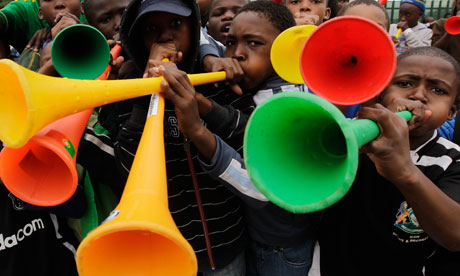
The 2010 World Cup is in full swing and the matches so far, in my opinion have not been as exciting as hoped, but it's only the first round so I am not too worried. But the REAL buzz of the tournament so far has been the loud, unapologetic and fancy-free vuvu.

The vuvuzela has been creating quite a riot - literally and otherwise - in this year's World Cup. Many people are irritated by the noise which it creates,which mimics an elephant, saying it drowns out national anthems and patriotic chanting and songs and basically distracts from the game. But bet your vuvu, the buzz has made vuvu the unexpected star so far of the World Cup. No player or team has gotten as much coverage as the vuvu and I think it should get a publicist to manage its 15 minutes of fame.

Many games have come and gone without much to remember apart from the football moments. The energy so far from South Africa has been amazing and infectious and the moments are sure to be memorable. When the International Cricket Council (ICC) decided to restrict traditional WI cricket cultural traditions as the region hosted the ICC World Cup in 2007, it was no longer a West Indian World Cup. It was a cricket World Cup merely held in the West Indies. The elements which would have made the tournament unique and special were gone, leaving only the cricket and its international players. The calls to ban the vuvu are as loud as the vuvu itself, and there will be much debate about it during the Cup, but it is part of what makes the tournament uniquely South African - giving it a unique selling proposition; setting it apart from World Cup tournaments gone by.

The vuvu may not be the most loved instrument at the moment, but it surely the most sought after, with sales of the obnoxious plastic horn climbing daily. A friend of mine in South Africa at the moment confessed that it is a bit harsh on the ears, but he has bought them in many colours as souvenirs for friends and family - mementos of the first African World Cup. The instrument is also available for sale across the world, e.g. in the UK. and is quickly becoming a cash cow for wily businessmen, seeing the opportunity to capitalise on all the noise.

The vuvu is effortlessly creating greater buzz around the 2010 football showcase and at the moment is surely outplaying stars like Kaka, Rooney and Ronaldo. It says nothing, does nothing, but is still as popular as any star player. It has its own app, is a blog star and is the hot ticket for merchandisers around the world. Additionally, its PR star power has now been harnessed by the United Nations...yes...the UN, to heighten awareness around violence against women and children via its Blow Vuvuzela campaign.

It is doing a fantastic job, like it or not, of selling South Africa and selling its World Cup as distinctly African, and hopefully as one of the most memorable World Cups ever.

Vuvuzela basics:

USA vs England: Perception vs Reality

So the NY Post debuted this now infamous cover on Sunday after the USA drew 1-1 with England at the World Cup on Saturday.


Now, to say this cover annoyed me initially would be an understatement. I mean, a draw is not a win, not by any stretch of the imagination. That's just reality. A draw does not give you 3 points, but merely 1, and furthermore, the quality of the goal which brought the USA to this point was not one for the record books. At least not for the USA. Robert Green, the unfortunate and villified English goalie decided to give the other team a hand. So in my football circle and in many other circles, where the footballer right now is King, the reality was that the USA was delusional, desperate for glory and sad. lol.

But after a good night's sleep, I overcame my annoyance with the cover, remembering our own "win" in 2006, when though we did not win by a draw like the Americans, Trinidad and Tobago in our very first World Cup ever, bravely and skilfully withstood the roar of the Lions and did not totally embarass themselves with a 10-0 scoreline (good morning Socceroos). Though we did not plaster T&T wins against the English 2-0 on our newspaper, because that would have been a laugh and that sports editor would have been run out of town, it felt good nonetheless.

I guess for the USA, a country that calls the beautiful game soccer and as one tweeter complained on Saturday, is happier to have the tv in the bar on a rained out Nascar race as opposed to watching their national team play football in the greatest footballing show on earth, a 1-1 draw was indeed a victory. A 1-1 draw against a team from a country with one of the best football leagues in the world.

But more than that, it was a sale - a great PR push around a perception that this team had the chops to be a contender. A cover and a headline and an image like this one - happy and exuberant red, white and blue clad "soccer" players celebrating a goal, regardless of its merit, is bound to create some good buzz around the team, so there could be more World Cup on LCDs over the next week or so, and less Nascar. Good news for the sponsors, the advertisers, the MLS and of course the team. It's a good PR cover for a team that does not yet have the same rabid support as the NBA, NFL, or clearly Nascar.

The perception celebrated here is that the USA had "come good" when noone else thought they would, and had proven that "soccer" had a place in the American sporting fabric; that it was not just a thing a bunch of guys did for fun, but a real passion and one which they were getting more competitive at. I cannot fault them for that in the end. It's a win.

But taking off my PR hat and putting back on my boots, the reality however, still remains that a draw in its most technical sense is still not a win and there are more games to come.

In case you missed it the first, second or 50th time...Robert Green.

They are Ready!: Africa's PR Test

As we count down the mere hours to kickoff of the FIFA 2010 World Cup (in case you were unclear as to what was kicking off, in case you live under a rock in a deep, dark cave), it is clear that not only is it the largest and most spectacular showcase of global footballing talent, but it is also a HUGE public relations and marketing coup for South Africa and by extension, the entire African continent.

I am sitting here, thanks to the lovely Kim, taking in bits of the WC kickoff concert and the talent and pageantry is absolutely amazing. Here is a chance for for Africa to shine and put themselves out there in the most positive light; to harness the glare of the global media and turn it to their advantage by marketing all that is beautiful and powerful about the continent. For years, we have sat by and watched Africa's hunger, bloody civil wars, corrupt and vicious dictators, battles with epidemics like HIV/AIDS and that has been what we have come to associate Africa with more times than we should. The world had formed its own image of the region.

But now it's their turn to show us THEIR Africa under the full lights of our scrutiny and against the backdrop of stereotypes and prejudice and so far, it has been beautiful and thrilling and touching and powerful. It's the reason island nations fight for beauty pageants, regional and global conferences and sporting events - to put their PR machinery to work, to put their people and their culture and their very beings to work for their economies, for their productivity and for their pride. For the chance to show the world, "Here we are. This is who we are!"

Let the beautiful game begin in beautiful Africa. Bafana! Bafana! Nelson Mandela must be truly beaming. I am ready for the World Cup and so is Africa.

The Female Consumer: The almost-forgotten football fan

I have not spared much time to check out all of the campaigns for World Cup 2010 just yet, but I am sure the sponsors have gone all out in pimping out their brands and creating innovative campaigns which would maximise their advertising dollars (hopefully). But it would be interesting to see how many of these ads specifically target women. I am a football fan and I cannot say that in past tournaments, the advertiser has been speaking to me. He/she has been sending loads of messages to my father, my brother, my boyfriend etc, but the story ended there. There was no concern for the fact that I too sit down fixated by the movements of a black and white ball for at least 90 minutes; no real recognition of the fact that millions of women are also rabid fans of the beautiful game. Football is not a man's game by any stretch of the imagination, so I would expect that the marketing would no longer be tailored just for my male football viewing counterparts. Begone silly ads with scantily clad women in the background.

The great thing about social media is not only that it allows two way engagement, but it somehow also levels the playing field so to speak. The Coca Cola campaign is a good example. The campaign invites fans to share their videos, celebrating Roger Milla's infamous goal dance. It's great because now, with her camera or mobile phone, the football loving woman can get in on the action.

Campaigns now, because of the nature of the technology which has the ability to make them universal in a shorter time, have real community power and can no longer focus on the age old stereotype that men alone enjoy a football match with their mates. The nature of football in itself is that it is the centre of a huge global community, so it's time the marketing got on board that train. I watch more football than some of my male relatives and friends, and *gasp*...I'm a woman. Looking forward to the greatness!

Visa's 2010 spot, just one of the many ads that will be running during the beautiful month!

A Mascot Affair

,
It has now become almost customary in global events such as the FIFA World Cup and the Olympics, to launch event-related mascots aimed (supposedly) at children. With the recent launch of the London 2012 Olympics mascots, I thought it would be fun to take a look at some mascots, for better and for worse.

Willie was apparently the first mascot (waaaaaaaay before my time) and can be considered the Father of the Mascots, heralding the start of the 1966 World Cup in England.


Mexico did not bother to go with the animal theme in 1986 when they hosted the World Cup. Instead, they chose Pique, a friendly jalapeno pepper - easy on the eyes, friendly looking, approachable (as approachable as a spicy vegetable can be, that is).


The US had Sam the bald eagle for the 1984 Summer Olympics and let me tell you, I had a Sam lunchkit, thermos and lunchbowl, because Sam was hot. Apparently he was too hot cause some thieving child stole my Sam lunchbox just 2 weeks after I got it!


Then we have Footix. Yes, Footix. Odd name, but he was the feathered (anti-KFC) mascot during the 1998 World Cup in France.


I am a bit biased when it comes to the Fuwa of the 2008 Olympics, and I have everything Fuwa - mousepad, pencils, temporary tattoos. Beijing opted for 5 mascots as opposed to just one - a panda, a fish, a Tibetan antelope, a swallow and the Olympic Flame.

And the most recent football hottie is Zakumi, the footballing lion representing the 2010 World Cup in South Africa. I think Zakumi is hot and exudes strength and a great deal of self confidence and attitude. I so want a stuffed Zakumi. (Really!)


And then we have, the 2012 mascots from London - Wenlock and Mandeville. They actually don't look too bad in this version.


Do these guys not look less like plucky, friendly mascots, and more like aliens bent on enslaving all of humanity? - Runners' World

Now, I do applaud the fact that the designers sat with kids and vetted these characters with these intuitive thought leaders.
Olympic Organizing Committee chairman Sebastian Coe apparently said that children don't like cuddly animal mascots and instead prefer "something they can interact with and something with a good story behind it." - The Gazette
And what is the story?
In author Morpurgo's vision, the pair begin life as two drops of steel from a factory in Bolton, taken home by a retiring worker who fashions characters out of the metal for his grandchildren.They appear to have a single central eye, explained as a camera lens, through which they'll see the world, and respond to it. - BBC Sport

(Children don't like cuddly mascots? Really?)

But with the negative comments coming from the adults, it begs the question, are mascots only limited to children? Usually, especially if one has journeyed to the event city to take in this once-in-a-lifetime experience firsthand, one wants souvenirs to remember the occasion by. And usually the key chains, and mugs and tshirts and postcards etc are all branded with the official event mascot. Wenlock and Mandeville sadly don't seem to have found favour with the people with the cash and credit cards just yet. Maybe as time passes and as excitement builds, they will come across less hideous and more palatable to consumers.

Adults seem to love their team mascots enough that they often buy silly hats and replica costumes to celebrate their mascot. Athletes love their mascots.


I love my mascots. So are Wenlock and his one-eyed buddy just too out there for the rational minds of the adult mascot-loving public? Though the commercial partners were apparently consulted during the creative process, should there have been a focus group of over-13's to help put this concept together? Are designers over-estimating how kids will embrace a mascot and ultimately the event, and underestimating the influence of the adult consumer and sports fan, and his/her purchasing and marketing power? Not only that, but many feel the mascot should represent their nation, in a good way, and reflect its heritage and its history and its people. Sadly, our boys don't seem to be too loved by the British.

Time will tell how well these one-eyed creatures fare among adult fans, but in the interim, the global passion around them is amusing.
- I checked the calendar to make sure it wasn't April 1st, but I'm sorry, I just can't believe this isn't one MASSIVE, EXPENSIVE, JOKE!!!.....thanks to the creators of these hideous phallic symbols for making us the laughing stock for the rest of the world!!!

- Children (my son being one of them) have been aspiring to be Olympians for years without the lure of an Olympic mascot!! How mindless does the 2012 Olympic committee think our children are?
- For the sake of what remains of the dignity of our great nation, please remove these jokes and get back to the drawing board please, and this time...BEFORE you go to the pub!!!
- Totally ridiculous! Nearly as bad as the Olympic logo.There are so many things that could have been used to symbolise this country, things that people actually associate with the UK. But one eyed monsters? No way! What planet are they on?
- Nooooooo this is the OLYMPICS not a children's show...don't they understand!?!? Word-classs athletes, the best in the world or competing...this isn't a school's July sports day. Children aren't going to care about the history of the mascots...they don't watch the teletubbies and ask their mothers...'mummy, whose shape are the teletubbies based on...and what's their history?'. The just watch and absorb.

- Horrid! What on earth were they thinking? Britain has one thousand years of greatness and grandeur from which to choose the symbols with which it will represent itself to the world, and yet somehow the powers-that-be chose THESE? Nauseating, ugly, cyclops creatures so awful, so immediately stomach-turning, that their most likely effect will be to convince viewers to turn off the Olympic broadcast rather than risk inviting the nightmares that repeated exposure to these vile things is likely to provoke.    Readers comments from the Telegraph.
And luckily for London, they are not the first with a wacky mascot creation. Athens, are you out there?


Real Case: Perils of Small Business BEING Online

Now we all understand the importance of customer service and the importance of customer service training for staff. Customer service is usually one of the tenets of a strong brand and it has the power to set the brand apart from its competitors. I have had my fair share of excellent customer service and horrendous customer service here in Trinidad and Tobago. One bad example was when a waitress used the F-bomb to vent her frustration when SHE messed up my friend's order and she felt she needed to tell me I was F-ing confused. I did not bother to order anything after that. I did go to the manager and tell him about the encounter and his response, or lack thereof was alarming to say the least. In fact I think he was drunk.

Now yesterday I shared my opinion on why small businesses should be online. But while we do create a website or a Page or a Twitter channel, we cannot forget that how we interact with our online communities also constitues as customer service. Social media channels such as company Twitter pages and Facebook Pages allow brands to not only promote their brand, but they also use it as a conduit to deliver assistance to their customers.

In larger organisations, the communications and promotion either lies with a marketing or communications team or individual as the case may be, who usually have the skills to properly manage feedback and concerns. In the small business scenario, this is not always the case and it may be the owner or an employee. Here is an example of a social media admin gone wrong.

While service browsing recently, I came upon a Facebook Page for one fitness provider, where the customers were miffed about an unexpected and immediate price increase for membership. This was the first response from "management". I am posting it as I found it.
well we didnt even no until the day it was raised, but come on its only by $50.00 come on. its still a good rate and plus all d classes r for free, where else u gettin dat?...please, ok. where u gettin dat? yes we shld of let eveyone know in advance...but it has been done already
Shock does not begin to explain it. Of course subsequent customer responses were not conciliatory. The second response, from the second admin was:
I understand your dismay with the sudden change of membership rates. I apologise for this.  We take note of your suggestion for more notification and will bear this in mind for future operational/organizational changes that will affect our members. The rates for the first quarter were an introductory rate as is customary for all new goods and services in a developed and competitive market. However, you will notice that with the increase in rates, we have also increased the number and availabilty of classes, the increase in the floor space as well as the continuing increase of equipment and machinery. So while you may not benefit from class participation, there is and will be more and a wider variety of equiment available for your use. Again I do apologise for any issues that may have arose due the change of rates, but we do hope you continue to support (company name)
1. Customer service goes beyond frontline staff. It applies to everyone, in every department, across all functions and via all media, be it in a physical setting or virtually. Clearly the second response was a more measured and professional response, balancing the apology for the price increase with the benefits which the increase brought with it. I can appreciate that response more than the combative, not to mention, linguistically challenged reply up top. The danger they faced was that customers could have taken this poor customer service to the masses with the click of a mouse.

2. I am becoming more and more convinced that some organisations still view social media as "something else we can do" and not as a real, and powerful marketing tool. I swear, between this and some of the other local social media sites I have observed, it's almost as if they just asked the office boy if he had a Facebook acocunt and told him run with it. Social media just cannot be taken for granted and if you're going to be using it for your small business, then don't short change yourself.
  • Learn about the tools.
  • Invest in training your staff to use them effetcively and in a way that builds, not destroys your brand
  • Value the tools and what they can do for your business.
It is vital to hire, train, and monitor customer service employees. Each must understand what the brand is about, why their interactions with consumers are important, and what is expected of them - Augie Ray

And if your brand is now on the social media path, the same applies and is more important than ever!

The Perils of Keeping your Small Business Offline

Yesterday I tweeted this question:

So, is it?

I was actually trying to find a caterer for an event I am planning, preferably one closer to the event, and it has been an ordeal. Clearly a lot of small businesses are not online and this is worrying. I had to eventually resort to emailing friends for recommendations or suggestions and ended up calling a few of the options. Quite frankly, I find this tedious. I am online most of the time, so it is easier, not to mention more convenient to do a quick Google search, locate a website and then email the person. Or at least the website would have enough preliminary information that when and if I do call, I am not in a state of utter ignorance and I am a bit more informed and persuaded to make a positive consumer decision.
There are a lot of small businesses out there and I applaud this. I think it is great when people follow their passions and make their dreams of having their own business a reality. But really...gone are the days when you printed flyers on coloured paper and left them on office coffee tables and on lightposts. Why don't you have an email address for your business? This is not at all a winning move!
When I called the caterer that sounded the most promising, she asked me for my email "number"...wow. Then when I finally got the email, it was from her friend's email address because she did not have an email address, and the friend's address was sketchy at best (something along the lines of sweetreds@domain.com). A total fail.

Funding agencies for entrepreneurs should be equipped to assist small business owners with the information on these basics and why they are so important. While a start-up may not be able to afford a snazzy website off the bat, Facebook Pages have now made it easier to get yourself an online presence. Too easy. Way too easy. So, why aren't you online, and why should you be?

The internet is like the Yellow Pages - I only use the physical yellow pages when I am on the road and cannot get through to the operator. For everything else, I turn to Google. Millions of people feel the same way, so if you're not online, you're almost non-existent.
Visibility, credibility and promotion - It's all well and good to have people know you via a friend, but you can really establish your new brand with an online presence, which can take you from the lightpost to the masses with a couple easy steps and great content. For my caterer friend, if your menus are online, I don't have to wait for your friend to email them to me, or worse...fax them and hope it's a good copy.

Online orders/online business - There are those who have not seen a physical cash register in years because they live by online shopping/ordering. Don't limit yourself and lose the opportunity to bring in some extra business.

Analytics/Feedback/customer suggestions - How many people are visiting your site? Who are they? Where are they? This kind of information can help you market your business and develop new ideas to meet the needs of the people who have shown an interest in what you're selling. Additionally, you can get a lot of great feedback from customers which can assist you in fine tuning your products/services.
Not because you're operating out of your kitchen, should it mean that your marketing efforts should fall by the wayside. It's more important in the start up phase to establish yourself and get your business name, your services, your contact info etc out there to prospective customers. Your online presence is part of your calling card - it gives you greater legitimacy and greater visibility. And please...

  • Have an email address that identifies your company - sweetreds@domain.com is not it. Use your company name to identify yourself electronically.
  • Ensure your site, your Page and your website, are professional and cover the areas that a prospective customer may be interested in.
I am left holding a copy of a menu that leaves me a bit cold, and will have to now call her back and make suggestions. That is, if she answers the phone, because on my first attempt she had forgotten her phone at her aunt's house and the aunt had to take a message and have her call me back a couple hours later. If there was an option, where the business was already online, with a more convenient communication channel, then she would surely miss out on my event and my business. Don't make the same mistake.

Photo credit: www.freewebsitetemplates.com

Zeroing in, or out...on your brand

When Twitter zero'ed out last week, lots of faces crumpled in anguish, in sheer terror because the legions of followers they had built up over the past few weeks, past several months were suddenly gone, leaving them in an empty room, with no voices, no chatter, no hero worship. Among these were the brands who had painstakingly set up fancy Twitter pages, all nicely branded and boiler-plated. Luckily for all of them...us...it was a temporary glitch and in no time at all, the world had righted itself and following and followers had been restored.

But what if it hadn't? What if Twitter had screwed up your online "popularity" forever? What if you had lost all your followers - all those people who reached out to you during the day asking questions, retweeting your links, #FF-ing you? Would you have survived?

And more importantly for brands, do you have any idea who these people are? Now chances of knowing them all, may be slim to none. But is the rapport with them strong enough to withstand a crash such as this, and make them come back on their own, without you having to sit at your desk, trying to remember their Twitter handles?

It's something to think about isn't it? One lesson brands can learn from this is to not put all their social media energies into one social media basket. Some folks love Twitter and that's the extent of the relationship, but as we saw last week, it can be doom for the one-way brand. It's not an excuse to now go out and populate the SM universe. Be practical and relevant and go where your audience is sure to be. Be practical if you're a one-man show and it's just you managing social media.

But the other question coming out of the Great Zero is...

Would you have been able to keep on going without them?

There are some who have relied so heavily on social media that perhaps the traditional forms of engagement and communication have taken a bit of a hit. So on a day when the technology hits the skids, are you prepared to keep it going without missing a beat? Have you managed to create a synergy with your online tools and your traditional strategies to build a loyal offline community?

I often wonder where I would be if one day I lost my old phone (not a smartphone, so I guess it's a dumbphone), chock full of email addresses, phone numbers and texts with important info - all of which, sadly, is saved nowhere else. I think about a life before advanced mobile technology and how my telephone book was just that - an actual book, and I could rattle off numbers without blinking because I did not have mobile phone books to depend on. Now, with maybe the exception of my mother's mobile number and those of a couple close friends, I am just terrible with remembering data like that now. At the same time however, I am not limited by emails and tweets when it comes to my real life relationships. It makes it more fun, more convenient, yes...but it does not beat going out in the real world.

So really the question is How else are you building your brand?

  • Is your website a hot mess because you have sold your soul to Facebook and Twitter?
  • Do your followers know how else to find you, i.e. via your website or other platform, or do they think your Twitter URL is your...well...your URL?
  • Is your non-virtual frontline customer service below par because you are a Twitter customer service superstar?
  • Have you done away with in-depth articles or blogs because you've got 140 characters?

It seems ludicrous but it's a serious question - one which we all should be asking ourselves because at the end of the day, these are merely tools and not the whole enchilada. If the basket of eggs should fall, would that be the end for your strategy?

Unmasking the Faceless Consumer: The Importance of Relationship Marketing

I take my car to be serviced at the same place every 10,000km, not because they're cheap, because they are not. I go there because of the relationship and the after sales service. Last year, when my radiator did embarassing things on the highway, not only could I call my service company after hours, but they saved me the expense of double towing and sent a guy to my house after work the next day to replace my radiator. To say this was excellent and convenient would be an understatement. And as a woman, who is on the road a lot, the safety and reliability of my vehicle are doubly important, so this type of personal service is a bonus to me.

Sadly, not a lot of organisations understand that there is a person behind the dollar bills which come with a sale. They take your money, and send you on your way with a sense of longing and undone-ness. It's little things like follow up calls, after sales service, seasonal greeting cards which can make or break the relationship your customer chooses to have with your brand. I was pleasantly surprised to go to my bank one year on my birthday and have the teller wish me a happy birthday and give me a cute, albeit generic branded card. But it was the thought and the consideration that set her apart from her sour-faced counterpart in another bank and kept me loyal.

Now you also have  social media, which in its essence is about getting to know people, how brands use it to manage relationships is an issue which can also set one brand apart from the next.

A lot of brands are using social media to drive sales and let's face it, this is the world we live in. We are constantly searching for new and innovative ways to raise our brand's profile and increase consumer behaviour, and social media has been a catalyst in many instances for doing so.

Yesterday I discussed the social media contest and how it has been used by one brand to build its following. The following which it has now been able to create is now a great pool from which to draw out the eager consumer and this is great for the brand. How they now manage these thousands and thousands of people and engage them will be the second part of their social media story.  I don't want to just be one of the thousands, and yes, it may be a challenge to engage everyone, but this is why you embarked on a social media strategy isn't it? And you should now have the resources to properly manage these relationships, if in fact you are eager to form them.

Yes, we constantly hear ROI ROI ROI,  and we translate this in numerical terms - sales, number of customers, etc, but what about MY investment of my trust and my purchasing power in your brand? Where does my Return on Investment manifest itself? Just in your product? I am more likely to stay true to one brand because of the interactions I have had, or the service which they provide. It's the reason I choose one airline over another, or one telecoms provider, or one restaurant. We all want to feel appreciated and special in some small way and not just as a walking wallet. And be it via a follow up call to see if I am pleased with your product, or a DM or email to help me manage my customer issue, how we treat with the faces behind the cash register is important in building the brand and customer loyalty.

It seems almost trite typing it here but in my experience, especially here, it is like rocket science to some people.

How are you building relationships online and offline?

Social Media Contests: And the Winner Is...


Now I follow a few organisations on Facebook and Twitter. Why?

- I have an interest in them
-I have an interest in what they are selling
- I have an interest in the industry in which they operate
- I am looking for exclusive updates and offers

Now I have had the opportunity to win a prize via social media and that was great, but it's not my main motivation. I hardly have the time either. I joked with my cousin, who coincidentally won a prize from the community discussed in this post, that one had to almost live on the internet, stalking updates and tweets in order to get a chance to win, and then you're competing with hundreds of people who have the same idea at the same time. It's a bit much for me. But that's just me. Lots of people go looking for goodies and there is absolutely nothing wrong with this. I think it can be a great way to engage your community and get them talking or participating.

But I have seen where communities are formed and built with no real brand focus.  There is a recent example of where a community (same one where my cousin won his prize) has exploded with daily trivia and the like, giving away product-related prizes. The product related prizes are great. Simple, not too flashy. Gets people wanting to come get them. The trivia I was not too enthused about though. It's some of the most random things, not even closely related to the brand, not to the company, not even to the industry. Just stuff you could probably go on any arbitrary "Party Games" site and pull down. I must say, this was a tad bit disappointing. Yes, it's a pretty strong brand we're talking about, so some may say they don't need to do much, but give away stuff. But where is the value in that? Whats the point then?

The prize I won was related to the brand, and got me to come in and see the place (though I have seen it many times), but HOW I got it was also creative and forced entrants to think, discuss and share about the brand itself.  They focused the contest around an event they were having, and the trivia was about the event, the origins of the event in its native format and cool facts one never knew about the event. So one had to go searching out the info and in effect, one learnt about the event with the end result being the opportunity to win something related to it. So I was more informed, more interested and ultimately better positioned to make a purchasing decision based on the whole contest experience.

This current contest experience does a lot to build the following, but not much to build value. The other content being shared as well is soooo random. No product updates, specials, company updates. There are a few photos from brand events which are great but when I saw the random YouTube videos, quite like the ones you may share with your friends on your profile page, I was a bit astonished.  I am hoping that maybe the first objective was to build the following and then engage them once they had them. But seeing that they are now in the tens of thousands with the following, can we start the value-add?

I know we love numbers and big numbers at that, and that's fine, but social media should not just be about numbers but a meaningful community. I love getting feedback from my community on things related to what we're peddling and on the general financial matters, which I think help them and help us as well. And while we may not have flashy stuff to give away, I think there is a greater value in hearing what customers like, don't like, want, don't want and empowering them to voice their opinions. Not saying we don't give stuff away. We do, though not as much as others. But what we do give everyday is something which focuses on the brand and the helping the customer. I think that's worth a whole lot, but again...that's just me.

What do you think? Great strategy or could be better? Who's the winner here?

5 Tips for Creating a Successful Social Media Contest

Communication Nazis: A Term of "un-Endearment"

A guy I know met me in the mall a couple weekends ago and as he kept me back from perfume shopping, he told me about his plans to visit the UK soon.

Him: Going to help my cousin with his business for a little while. He does exonerations.
Me: (utter bafflement)
Him: You don't know what exonerating is?
Me: (utter bafflement, followed by reflection, then by more bafflement, then more reflection and mind searching: Exonerate means, ummm...to free from blame or guilt, right?)

I was baffled because I knew what I thought exonerating was, but the dude clearly was not in the legal profession, nor was he a P.I. but I could have been wrong!

Him: He digs up dead bodies so they can do autopsies.

It took everything in my physical and mental being to not laugh, and I feigned edification, with an "Ohhhhh". Poor guy was so confident in what he was peddling, and so pleased that he taught me something, that I did not have the heart to tell him the word was exhumation, from the word, exhume. Maybe next time.

As confused as I was during that brief conversation, so too are some of the people we write for. Show of hands if you have started reading something that just went right over your head because it was either chock full of jargon, or just written with the simple objective of baffling you. A gentleman I do not even know this week, accused people like me, communicators working in finance, of being Nazis when it came to communications. Now the dude does not know me or what I do or even how I do it, and calling me a Nazi was not going to get you listed in my good books, but sadly, dude has a general point. Some of these financial documents you pick up in a bank can just turn your grey matter green, and while there is an audience for that hardcore communication, not all clients are the same.

Now to be honest, when I write for work, I am also learning because I hardly know what these people are talking about when they start to get all technical with the financial terms and jargon. The extent of my money vocab is "pay me" (kidding kidding). But again, it comes down to knowing the audience I am trying to write for - people who are probably just like me or worse, and don't quite get the really hardcore moneyspeak. I am a purist writer at times - anal about spelling, grammar and abbreviations, but over the years I have come to grips with my reality and the reality of the different audiences I have had to communicate with in various roles. So...


1. Think of the audience and not yourself when writing. You may enjoy writing with lots of colloquial terms or use a lot of big words, and that may work for you. It may not work for your audience. And ask yourself, what is it that THEY want to know about this topic, not what I want to write. Don't be so self absorbed that you miss the point of who you're trying to reach. Think of them sitting in front of you, because you are indeed writing directly for them. If you don't approach it this way, you can very easily lose them before they even hit the second sentence.

2. Use simple language. Don't be a Nazi. That is not even a cute term (take note, don't ever use it), so don't force the technical terms down the consciousness of your readers. Sometimes even if the audience is very savvy, simple is still always better. Simple works. Less is more. The writing is clearer and to the point. It was @Trini_Mitz who pointed out an example in a local media article where the journalist used a huge word and then put the meaning in parentheses (brackets). I mean, if you know the word may not be understood, why use it?

3. Be correct. Get both your facts and your language straight. Good articles are well researched and structured, and reflect on you.The dictionary and thesauraus are your friends. Use them. Please.

Please.

3. Don't be daft. If you write for your pleasure, chances are you're writing about something you're passionate and knowledgeable about. However, if you're part of a comms team somewhere in some place where you don't know what the heck they're talking about half the time, wouldn't it be super if you actually started reading and learning about the industry you're now in? Don't let your writing come off as ignorant or fluffy. I still grapple with some of this dry financial stuff, but I read a lot (a lot!) and ask questions if I am not too sure and of course, you can let a subject matter expert review it and contribute. I mean, what's the worse that can happen? You learn something new? The horror!

4. Edit. If your subject matter expert is doing the writing and we know sometimes they can do the whole jargon thing, because they are not thinking like a communicator, then do the needful and apply the first two tips when editing the article cause most times it will need that human touch. Lend YOUR expertise to theirs.

So next time you're writing for Jill or Jack Brown, don't take it for granted that someone out there REALLY wants to read your stuff just because you're writing it. It's a bit more involved than that. Aim for more head nodding as opposed to blank stares of confusion.

Photo credit: http://fysop.wordpress.com
Related Posts with Thumbnails