Showing posts with label public relations. Show all posts

The Evolution of Evaluation...or is it?

On 21 April 2007, GlaxoSmithKline started a communications revolution when the pharmaceutical giant became the first company listed on the FTSE 100 share index to send a tweet.

Eight months later, on 5 December 2007, Carnival Cruises set sail on its Facebook adventure, becoming the first FTSE 100 company to establish a presence on the social networking site.

Today, 67 members of the FTSE 100 index are actively engaged in social media.

three [d] Digital and Social Media, www.threepipe.co.uk

In an earlier blog entry, I decided that PR evaluation is often overlooked in theory and in practice and thus came my topic for my Master's dissertation. Organisations are using public relations (PR) as part of their “problem solving and change processes” (Broom, 2009, p. 285), and while many practitioners are implementing a myriad of campaigns by which to do this, there is still widespread debate about PR, and its effectiveness and value from a business perspective.

Amidst the continuing debate about the evaluation of PR, the rise of new media technologies, notably social media, offers a new challenge to PR practitioners as it relates to evaluation. Many trade associations such as the CIPR, the International Association of Business Communicators (IABC), the Public Relations Society of America (PRSA) and the Association of Measurement and Evaluation for Communication (AMEC) have consistently been asking the question, “How do you get started in measuring social media and what are the relevant metrics?” (CIPR, 2011).

My study will explore what PR practitioners across the FTSE 100 companies expect to achieve by integrating social media into their ongoing programmes and campaigns, and more importantly, how well they evaluate these objectives and what are the prevailing metrics, methods and tools used across the industry.


I have already had the opportunity to interview a few PR practitioners from large UK companies and gained some fantastic insight from them. However, I am still looking to deepen my understanding of how social media evaluation is being carried out by PR executives in the UK. 


I am hoping UK-based PR practitioners will be willing to assist me in my research by agreeing to a short interview. The interview should not take longer than 45 minutes, and I am more than willing to meet with you at your office or a location convenient to you, or alternatively interview you via telephone.


I can be reached via email at avianeh@hotmail.com, and you can also find me on LinkedInI genuinely appreciate your time and willingness, especially in light of professional commitments.


Thanks a lot everyone, for your support and assistance! 

----
References cited:
  • Broom, G.M. (2009) Cutlip & Center’s Effective Public Relations, 10th edn. New Jersey: Pearson Education Inc
  • CIPR (2011) Social Media Measurement Guidance. Available at: http://www.cipr.co.uk/sites/default/files/Final_Social_Media_Measurement_Guidance%20_March_2011.pdf (Accessed: 2 April, 2011) 

JetBlue Continues to Differentiate its Brand

With the simple tagline of "If you wouldn't take it on the ground, don't take it in the air", JetBlue has been attempting to differentiate itself from its competitors. The ads which are clearly YouTube-ready are simple and challenge some of the unpopular airline policies which many travellers complain about - simply by transferring them to the random chore of taking a NY taxi or buying a soda. It really makes you think about what we put up with in the air, and JetBlue is positioning itself as the clever and reasonable alternative to the other airlines, in a fun way, using the amusing and totally relatable reactions of real people caught on hidden camera.

Having never travelled on Jet Blue, I really cannot speak to their service but their ads are classic and the Asian guy in the taxi ads is brilliant. My winner today!


How Do You Measure PR?

PR Measurement is critical and not an option!
I have found recently that in doing assignments, with limited word counts, that one of the shortest sections, if not the shortest section is usually the Evaluation and Measurement section. Much goes into the strategy and tactics sections, with details going into the appendices, but the poor Evaluation section suffers.

In real life, it shouldn't and it is the reason I have decided to look at PR measurement, specifically social media in PR measurement for my dissertation. Evaluation is nothing new, but with all the buzz about social media, all the hype and gloss, many people are interested in the question - how do we measure this thing? I am interested in it.

Advertising Value Equivalents (AVEs)
have no place in PR measurement
There are still so many nebulous areas where measurement is concerned and not enough standardisation. PR Week recently announced it would not considering AVEs as a measurement criteria for its annual awards. The Association for Measurement and Evaluation of Communication (AMEC) has also been steadily campaigning to do away with the AVE as a standard for PR measurement.

Evaluation and measurement of PR is nothing new, so why has the PR industry taken so long to make its own mark on evaluating what it does, rather than using metrics from other disciplines as a benchmark? And like my assignments, why do we shy away from research and evaluation, while paying a great deal of attention to tactics? I would think that one would lead to the other and to the other - A to B to C.

And now with social media, which may still come across as fluffy stuff to some senior executives, that we have now really been focusing on proving its value and showing how it can be evaluated, the whole question of measurement of PR in general seems even more critical. The Barcelona Declaration of Research Principles was released in June 2010, and for the PR industry, it is a good first step:


  1. Goal setting and measurement are fundamental aspects of any PR programme
  2. Measuring the effect on outcomes is preferred to measuring outputs
  3. The effect on business results can and should be measured where possible
  4. Media measurement requires quality and quantity
  5. AVEs are not the value of PR
  6. Social media can and should be measured
  7. Transparency and replicability are paramount to sound measurement.


So it is in honour of my abbreviated evaluation sections over the past few months, and out of a genuine interest to see what my peers are doing in real business cases, that I will be pounding the library and the doors of industry to find out, what are we doing, how are we doing it in terms of PR/social media measurement.

Rock the Red Pump

I ran across the Red Pump Project a few weeks ago while blog hopping and thought it was such a fun and creative way to get women talking about HIV/AIDS. I mean really...what do most women love, if not shoes? I think having an excuse to wear a pair of red heels is great on a normal day. Wearing your killer ruby reds to raise awareness about how HIV/AIDS affects women and girls around the world is just a fantastic idea. It just takes the standard red HIV/AIDS ribbon to another level - reaching out to women using what is most familiar to them. Not to mention most fierce.
Every year, the United States recognizes March 10th as National Women and Girls HIV/AIDS Awareness Day (NWGHAAD). It’s a nationwide initiative to raise awareness about the increasing impact of HIV/AIDS on women & girls and encourages ladies to take action. While progress has definitely been made in the areas of AIDS prevention and treatment, women still represent 27% of all new AIDS diagnoses, with African-American women accounting for 66% of that group. This year focuses on this statistic, “Every 35 minutes, a woman tests positive for HIV in the United States. - Rock the Red Pump website


March 10 is Red Pump Day, so ladies, if you have a pair of red pumps, tomorrow is a great day to take them for a whirl around town. The group will also have a Twitter townhall starting at 1.30pm CST and you can follow them - @RedPumpProj and join the conversation by using the hashtag #redpump.

I just love this idea and love that groups are being creative with the ways in which they support causes such as HIV/AIDS awareness, because the reality is, to stand out among the clutter of messages out there, one really has to be. Good luck, Red Pump ladies.

Master's Dissertation and the Increasingly Vast Communications Word Cloud

So you've gone through one full semester and part of a second and you have been exposed to theories and case studies and group projects and brainstorming. You have gotten excited over parts of a module and depressed over an entire module and it all leads up to one defining moment.

The selection of a dissertation topic.

It is probably the single most stressful moment of your academic career. And while you know you must select a topic that you are interested in or passionate about, there is also the other side - how much literature is available around your passion? Do you have a firm jump off point? What is already known about it - where are the areas of debate? And of great importance to an already stressed out student - what are the likely problems one can anticipate in planning to explore this topic?

My dissertation word cloud
There are a lot of ideas swirling around my head - a couple core concepts that I am exploring. Getting feedback from others is always a great way of drilling down from the general to the specific. The communications word cloud is expanding every day, challenging established theories and creating new modes of doing things. It's exciting as a practitioner, and maddening as a student on the brink of selecting a topic for a Master's dissertation. My personal word cloud - my dissertation word cloud - looks like this, and I need to drill down and be both passionate and practical. Easier said than done.

I am still soliciting feedback and suggestions, based on the topics floating around there in my word cloud. I have been reading and contemplating and speculating and planning and lots of other -ings. It should be pretty demanding and exciting to say the least. But should also include tonnes of learning.

Lights. Camera. Fashion. And the evolution of media relations

Photo credit: AP Photo/Andrew Burton via Yahoo News
Hair. Makeup. Couture.
Press. Publicists. Bloggers.

New York Fashion Week is on and what I love about this is how the media landscape has changed from a few years ago to what it is now. Social media has changed the face of media relations across the PR industry. Gone are the days when having a by-line in a newspaper made you the most important dude to a PR exec. Now with a laptop and an opinion, you can catch the attention of PR teams, whose eyes now have to scan new forms of media to gauge opinions about their brands and to build their brands.

Photo credit: Reuters/Eric Thayer via Yahoo News
I love that Tumblr has sent 24 of its fashion bloggers to NYFW. Just regular people with a love for fashion, who have a great following and who have the power to influence their readers.Great strategy for Tumblr, which is a favourite platform for photogs and fashionistas.  One of their Tumblrs is only 16 years old - from Devon, England. She will be rubbing shoulders with Oscar de la Renta and top fashion editors, and "reporting" live from one of the premier fashion events in the world. A 16 year old can open up the world of high fashion to an audience that may yet be untapped by traditional media. It's pretty damn awesome.

Media ownership now goes way beyond conglomerates. It lies in the keyboards of the citizens of the world. Media relations strategies now have to include and consider social media influencers in promoting the personality and image of the brand - making brands so much more accessible to so many more people. It's really fantastic how quickly things have changed.

I regularly follow one of the 24 Tumblrs - Jessica Quirke - and she is having a remarkable experience. She and the 54,000 people who follow her religiously. Amazing.

Public Relations - Does it Make Cents?

While doing research on a project over the past week, I realised that the question of budgets for PR was a nebulous one in the literature. So of course I went to the real world via Twitter and the feedback was not that surprising.

In my own experience, over the course of a few different jobs in both the private and public sectors, the process around PR budgets varied. In one role, we had a flat budget annually. There was no negotiation - take it or leave it. Somehow we had to make this stretch across advertising, stakeholder engagement, CSR activities, internal comms activities.

Most of the time though, the budget process was simply around what I call "submit and pray". You planned the year's activities, plotted the financial resources required for said activities, submitted the budget and hoped to God the powers that be would see it your way. They often never did. Budgets came back slashed by 30, 40, 50 percent and still you were expected to make the organisation and its brand shine like a new shilling.

And between reponses from my Twitteratti like "what budget?", "PR what?" and "Budget? LMAO", I realised that the PR professional in many cases suffer the same fate I did, in that somehow the PR budget is at the bottom of the cash money food chain. Even in my last job, most of the money we eventually got, was pillaged to get advertising spend.

So what is the reason for this? Is PR still the bastard child of the organisational family? It really all comes down to how PR positions itself within the organisation and how valued it is, how valued its people are. It's a circle of life that starts with people and power and perceptions. Until those things are in alignment, then the tweets like "PR budgets exist?" will continue and then that is truly a blow to the work that we try to do.

Return of a PR Superstar

I must first apologise to everyone for being such a bad host. I have been beyond busy and the blog was a victim of my new life.

But I promised that 2011 would see me doing much better so please accept my apologies and give me another chance!

I guess I should tell you that I am now a full time Masters student in London - in what else? Communications (with a lot of Marketing as well). I have been here since September - hence the date of the last post. It has been a maddening pace. Maddening. The transition from corporate lush to library-beating student was not that traumatic - mainly because I was not a corporate lush. Part of any good employee's job function should be to constantly stay in the loop with the latest trends and developments in their field. This blog allowed me to explore some of these trends and to meet people who allowed me to see what they were doing in their roles, in their countries. So getting into a formal setting where we were being taught about what's happening - not that much of a stretch.

I have been learning a lot and often, contributed much more. Having job experience - and not just summer job experience - but considerable and hefty real-life corporate experience, has made this even more illuminating, because you can start applying stuff in your mind to real life experiences.

It's almost dissertation time and I am leaning towards a dissertation on sponsorship, but being the social media maven that I am, I want to maybe look at it from that angle. Suggestions?

My 2011 resolution is to be a better communications blogger. That sentence in itself is a bit of a contradiction. By way of being a communicator, this should be a non-issue. But sometimes life just gets in the way. I hope to see you guys more often this time around.

Happy New Year and welcome back to me!

This Time for Africa

One month, 64 games and 145 goals later, the world's biggest event is over. Dry those eyes and pack away those vuvuzelas because you have to wait another 4 years until the next one. But what a World Cup it has been. I think this tournament will be one that will be remembered for years, for a variety of reasons - footballing and non-footballing reasons.

But I think as the sun goes down on this World Cup, South Africa can be duly proud of what they have achieved as host and as a country. The hosting of this tournament for not just South Africa, but the entire continent of Africa has been a marketing and rebranding coup. Two years ago, FIFA President Sepp Blatter said
“People don’t want to trust Africa. That is wrong. Africa has given so much not only to football but to the whole world. Someday, something should come back. So let’s have this World Cup. Let’s celebrate Africa. Why not?”

And celebrate we all did. Even though popularised by a Colombian singer, the strains of "Waka Waka" and its tag line "This Time for Africa", continue to filter through the airwaves, leaving it as probably one of the most popular tournament anthems ever.The world has looked to South Africa over the past month for great football, but got more than they bargained for in the artistry, passion, energy and dare I say, unity of its people.
This game allowed Africa to showcase its beauty and the remnants of Apartheid regime, to the outside world, which seems to have no idea how bad things were and that there is a better side of Africa(beside tribal wars and starvation) which international media—for its own convenience ---tends not to focus on. - Ghanaweb

Whether the powers that be will leap on the momentum which this World Cup has generated and leverage all the positives into effecting socio-economic change is another story, but well done South Africa.

And without a doubt, this tournament's immense public appeal and attraction was heavily invested in the fact that we had greater means to communicate, participate and enjoy the tournament's various facets. World Cup 2010 was supposed to be the social media World Cup and boy was it ever. Information, debates, opinions, replays - all available at the click of a button, whether it be on Twitter, Facebook, Youtube, the obsessed and the curious all found a way to be part of this global phenomenon via this global phenomenon. Sponsors and pundits alike milked it for all it was worth, tapping into the enormous audience primed to receive messages.

Twitter reported that the World Cup or #Worldcup resulted in a record 3,283 tweets per second as opposed to the regular average of 750 per second. The fail whale was almost as recognisable as Paul the Octopus, because of the barrage of tweets around the tournament. Social media has truly revolutionised the way we love the game, and the way the host country was marketed to the millions who could not make it there to see the games live.

At the end of it all, though Spain were crowned the best team in the world, the real winners were South Africa and social media, and all the people who joined the revolution to make this one of the best tournaments the world has ever seen.  Brazil 2014 has some rather big shoes to fill, but I think they can do it. In 4 years, this phenomenon may be bigger than any of us can ever have imagined.

Runners up: Paul and the vuvuzelas.

On Sale: Your Small Business

A couple weeks ago, my mum and I had a Mum/Daughter shopping day and I had not been to Grand Bazaar since the interchange was opened cause frankly, I did not know how to get in. lol. But in any event, we made and during our mummy/baby adventures, we checked out a new store - J&K Signature Styles, which had only opened at its second location that same week. Needless to say I got some very nice items in said store, but the real winner was the service and the marketing.

Many small business owners leave marketing of their business to chance. The photocopied flyers and word-of-mouth, though not dead, are simply not enough to push a new business into the mainstream. It takes some extra effort to make your business stand out and create that buzz and I loved how the owners of this store had gone about doing that. And it was nothing particularly earth shattering or innovative. Just a simple email and text message. After I laid out some serious cash, I was signed up for their customer loyalty programme, gave them my email address and my mobile number, and a gift card outlining the details of a promotion they would be having in a few weeks time. Of course, the little card went into my wallet never to be seen again, but a couple days ago, I got a text reminding me of said promotion and the dates. This morning I got an email. And that is how this small business will get me to come back and spend more money I should not be spending.

Sometimes when starting that business, when negotiating funding and the like, the stuff like marketing, PR and promotion get forgotten. But this is the most important thing and should be planned for. Press ads are expensive and depending on the size of your business, you may not yet be able to afford full or even half page ads which have consumer pulling power, but there are other ways - email marketing, text marketing, customer loyalty programmes, open house days etc. You can have the best stock, the best staff but if noone knows about you or think you're a cut above the rest, then noone is going to care about what you're offering. The cost of that text message was minimal; the email free - but the ROI on both have to be worth something, including customer awareness and loyalty and sales.

The key point to remember that in order to get sales, you have to be on sale. Don't sell yourselves short.

White is apparently Right in China...or is it?

This morning a somewhat interesting story caught my attention on BBC (did I ever mention that I love BBC and that I dress with my tv on BBC, and then listen to it on the radio on my drive to work?). White guy in a tie. I am sure some of you already know about it but for those of you who don't, it's basically white men for hire in China - paid to wear a suit, go press palms with Chinese businessmen and create the impression that the Chinese firm that contracted them, has international or Western connections. Of course in a global market, international business is a big deal, and a firm's connections and global networks can be vital to its business and its image as a player in the global marketplace. But the question raised in the segment was Is this fraud or PR?

Some may argue and say "Hmmm...fraud. PR. Is there a difference?" You know who you are. But really, do you think this practice of creating a false impression to bolster public image and reputation is ethical? Wouldn't it be better to try to actually position your business via real networking and marketing? I would think that establishing real relationships with companies which are deemed as valuable to their position in China and beyond would be more practical, not to mention, ethical and would in fact bring REAL rewards. I have to wonder how this works, especially if this is a new trend in China. If everyone uses this as a viable marketing strategy, then how can you trust your suppliers, your competitors etc?

As I said, it was a pretty interesting segment.

Out of Touch with the Public's Reality

Though I have been caught up with the football, I am still in touch with the rest of the world. This is more than I can say for Tony Hayward, who thought it would be a good idea to go boating in an elite yachting event while barrels and barrels of oil gush into the ocean. It says a lot about not just Tony Hayward but about executives in general. There are many senior executives who somewhere along the way have completely lost touch with the "small people".

Their daily lives are somehow spent in a bubble where they fraternise among themselves and share the same belief systems, honed after years of living in said bubble. So when it comes down to dealing with life situations outside of that bubble - be it internally with employee issues or externally as in the BP case, they believe what they know to be right. It's when these issues manifest themselves in the public domain, that we recognise the growing chasm between those "up there" and the little people.

They spend much of their day at internal meetings, getting information from their managers. They get advice from their boards, who tend to be older men and a few women who are even further detached from the web. Board members have even less of a clue. So most CEOs are probably having the wrong conversations about the wrong things with the wrong people. - Business Week
Maybe if more leaders went "undercover" as in the CBS reality show Undercover Boss, or more realistically, spent more time interfacing with people other than their elite peers - employees, customers for example, they would better understand the way the real world works and how real people are affected by events that somehow don't seem to matter much to them.
"The Gulf of Mexico is a very big ocean. The amount of volume of oil and dispersant we are putting into it is tiny in relation to the total water volume." - Tony Hayward, May 14.
And it is these out of touch with reality statements and actions from BP and its executive which continue to exacerbate what is already an insurmountable scenario. It makes even the term "public relations" a misnomer because if he in fact had any type of real, honest to goodness relations outside of his myopic inner circle, then he would probably not be so regularly angering the public.

Licence to Kill. Licence to Tweet.


Even with the football fever gripping my senses, I am still aware that the world is not a giant football revolving around the sun.

The news headline on BBC news that morning was "Utah executes convicted murderer by Firing Squad". I have a host of other issues with this story but one of the most talked about aspects of it is definitely the tweet heard around the world.


Many people felt the tweeting of the death of a man, albeit a cold blooded, clearly sadistic murderer, to be grotesque at best and inappropriate. Mr Shurtleff says he believes in an informed public and he continues to "use social media to communicate directly with people".

I do agree with him there. Social media has changed the way we communicate and can really bring us closer to our various publics. But even though I am an advocate for social media, I always contend that sometimes we get so caught up in the hype that we forget the basics. I did not think Twitter was the best place to tweet about this and maybe that is my own moral perspective. But I also don't think Mr Shurtleff should be left to his own devices with Twitter. I really believe he needs a Twitter intervention because looking at this single tweet in a vacuum does not begin to demonstrate the fact that Twitter is a powerful PR tool, which in 140 characters can make or break one's image.

I was a bit taken aback by the lack of tact here. It's almost like he could not wait for the guy to be pronounced dead so he could have his 5 minutes of fame.


The AG would do well to think before he tweets, especially considering the very public office he holds, for while verbal comments may not always be picked up, tweets are forever. Yes, you may want to publicly defend your stance on "death by tweet" but berating your followers? Really?


And calling them whiners? Who is this dude's media adviser? Someone needs to hide his laptop and his smartphone!!!


I am after all this, slightly amused by his Twitteritis, and sincerely hope he gets help. And while we use social media for communicating news and important messages, as with everything else, some messages may require different vehicles for safe passage. There are also issues of what is and isn't appropriate for social media and these are questions that many of us may have to consider in the future. I mean, you never know what may be next!


PR Blues - The Fall of the French Football Team

Yesterday the problems for Les Bleus continued to escalate with the team refusing to participate in a public training session. The expulsion of one of their players, Nicholas Anelka seems to have been the last straw in an already tenuous situation.

The entire debacle does nothing for the image of the French and has attracted the scorn of global onlookers who have labelled the team as "recalcitrant, indignant whiners".

But it seems that this was a disaster waiting to happen, with a total lack of teamwork, communication and consultation off the field - the retention of an unpopular coach, the retention of players caught up in another, even more unsavoury PR disaster, the unwillingness to deal with contentious issues head on before they grew from mounds into mountains and ultimately into volcanoes which have now erupted. The subsequent fall out has now further undermined the once glorious image of French football, created by the 1998 World Cup champion team. Les Bleus are quickly becoming Les Ughs with their antics and fail to recognise that their selfish actions are not only impacting their World Cup performance but also their entire country. I would think that the honour of wearing the national colours would mean something and trump personal ambitions and feelings, but clearly this is not the case with this team.
Economy Minister Christine Lagarde, formerly a member of the national synchronised swimming team, slammed the boycott, telling a French TV channel: “I am appalled because I have worn the French national colours…and when you wear the French national colours, you have added responsibilities”. - France24.
Clearly noone spoke to them about their role as brand ambassadors for the tricolour and all it represents and how their actions could positively or negatively brand over 65 million people.Clearly noone mentioned to them that they were the role models for the little boys who aspire to be part of football history one day and be catalysts for the development of sporting programmes in communities across the country and the injection of corporate sponsorship to support this development.

Instead, they have chosen to make themselves the laughing stock of what was supposed to be a great tournament. Their statement to the media does not reflect the reality of the situation at all and is incredible at best.
"Out of respect for the public who came to attend training, we decided to go to meet the fans who, by their presence, showed their full support. For our part, we are aware of our responsibilities as those wearing the colours of our country. Also for those we have towards our fans and countless children who keep Les Bleus as role models."
It is a total reputational disaster for not just the players on the field but the supporters and nation which they represent and for the sport of which they were king 12 years ago. Perhaps, one of the biggest losers in all of this is probably the Irish national team who was denied a place in the tournament by yet another French PR disaster - the infamous Thierry Henry hand ball. I would like to assume that had they qualified instead of the French, they would have been committed to representing their country and the sport in more honourable fashion. But we will never know and are instead left with the ongoing fallout from a poorly managed situation on the part of all the parties involved, not just the players, who though are the ones left smack dab in the public eye and the ones making a bad situation worse.

Don't Hog the Ball: Adopting the Football Model in Business

Football is a team game; it always has been and it always will be. Having good positional sense, communication skills, and an awareness of where your teammates are is far more important than being able to perform a step over or shoot effectively from 30 yards or more.Bleacher Report 

And like football, communications in an organisation requires teamwork and the ability to create synergies across teams. No longer can team execute their responsibilities as silos and PR/communications teams cannot hope to develop and implement internal and external communications strategies without the input of other teams and a healthy collaborative culture.

When communications within a team breaks down and disharmony manifests itself, or a resistance to be part of a collaborative efforts, bet your last dollar that the results would not be as outstanding had the team worked together as a unit. I have been part of organisations where programmes were rolled out without proper consultation and feedback from the rest of the company. You get to work and there in your inbox is an email about some new programme that noone broached as an idea, or which clearly was not thoroughly thought out from various angles and employee perspectives. Something that may seem like a great idea to one team, may have other implications for another, but how would you know if there does not exist a deeper consultative culture? And while not trying to promote bureaucracy and unnecessary corporate red tape, because God, we know how that can go, it is always better to have other teams on board to ensure universal buy-in and support, and ultimately a better final product. The French football team is currently showing signs of team wear and tear and it is showing in their performance thus far at the 2010 World Cup.
Many of the French players seemed to be under the impression that they were there to create their own personal highlight reel rather than to perform as a functional team. Nicolas Anelka and Frank Ribery are both outstanding players, but they did not perform to anything like the level they are capable of against Uruguay.
The main reason for this was their reluctance to play simple football, to simply receive the ball, protect it and lay it off. Virtually every time that either man received possession they embarked on an ambitious solo run and almost without fail they ended up surrendering possession... (Bleacher Report)
In an organisation, one has to be open to new ideas and suggestions and to be able to provide different perspectives on strategies, with the end result being a more effective team with a common goal. It's like having your own internal focus group to weed out the bad elements of an idea and improve the good elements. And whether it's a social media initiative, an advertising campaign or an internal rollout, the double C effect of consultation and collaboration in my opinion, is always a better bet than hogging the ball and trying to shine solo. It often just does not work - in football or in business.

The World Cup's PR superstar

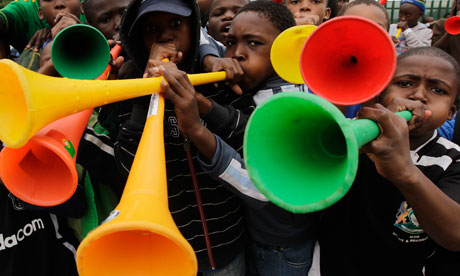
The 2010 World Cup is in full swing and the matches so far, in my opinion have not been as exciting as hoped, but it's only the first round so I am not too worried. But the REAL buzz of the tournament so far has been the loud, unapologetic and fancy-free vuvu.

The vuvuzela has been creating quite a riot - literally and otherwise - in this year's World Cup. Many people are irritated by the noise which it creates,which mimics an elephant, saying it drowns out national anthems and patriotic chanting and songs and basically distracts from the game. But bet your vuvu, the buzz has made vuvu the unexpected star so far of the World Cup. No player or team has gotten as much coverage as the vuvu and I think it should get a publicist to manage its 15 minutes of fame.

Many games have come and gone without much to remember apart from the football moments. The energy so far from South Africa has been amazing and infectious and the moments are sure to be memorable. When the International Cricket Council (ICC) decided to restrict traditional WI cricket cultural traditions as the region hosted the ICC World Cup in 2007, it was no longer a West Indian World Cup. It was a cricket World Cup merely held in the West Indies. The elements which would have made the tournament unique and special were gone, leaving only the cricket and its international players. The calls to ban the vuvu are as loud as the vuvu itself, and there will be much debate about it during the Cup, but it is part of what makes the tournament uniquely South African - giving it a unique selling proposition; setting it apart from World Cup tournaments gone by.

The vuvu may not be the most loved instrument at the moment, but it surely the most sought after, with sales of the obnoxious plastic horn climbing daily. A friend of mine in South Africa at the moment confessed that it is a bit harsh on the ears, but he has bought them in many colours as souvenirs for friends and family - mementos of the first African World Cup. The instrument is also available for sale across the world, e.g. in the UK. and is quickly becoming a cash cow for wily businessmen, seeing the opportunity to capitalise on all the noise.

The vuvu is effortlessly creating greater buzz around the 2010 football showcase and at the moment is surely outplaying stars like Kaka, Rooney and Ronaldo. It says nothing, does nothing, but is still as popular as any star player. It has its own app, is a blog star and is the hot ticket for merchandisers around the world. Additionally, its PR star power has now been harnessed by the United Nations...yes...the UN, to heighten awareness around violence against women and children via its Blow Vuvuzela campaign.

It is doing a fantastic job, like it or not, of selling South Africa and selling its World Cup as distinctly African, and hopefully as one of the most memorable World Cups ever.

Vuvuzela basics:

USA vs England: Perception vs Reality

So the NY Post debuted this now infamous cover on Sunday after the USA drew 1-1 with England at the World Cup on Saturday.


Now, to say this cover annoyed me initially would be an understatement. I mean, a draw is not a win, not by any stretch of the imagination. That's just reality. A draw does not give you 3 points, but merely 1, and furthermore, the quality of the goal which brought the USA to this point was not one for the record books. At least not for the USA. Robert Green, the unfortunate and villified English goalie decided to give the other team a hand. So in my football circle and in many other circles, where the footballer right now is King, the reality was that the USA was delusional, desperate for glory and sad. lol.

But after a good night's sleep, I overcame my annoyance with the cover, remembering our own "win" in 2006, when though we did not win by a draw like the Americans, Trinidad and Tobago in our very first World Cup ever, bravely and skilfully withstood the roar of the Lions and did not totally embarass themselves with a 10-0 scoreline (good morning Socceroos). Though we did not plaster T&T wins against the English 2-0 on our newspaper, because that would have been a laugh and that sports editor would have been run out of town, it felt good nonetheless.

I guess for the USA, a country that calls the beautiful game soccer and as one tweeter complained on Saturday, is happier to have the tv in the bar on a rained out Nascar race as opposed to watching their national team play football in the greatest footballing show on earth, a 1-1 draw was indeed a victory. A 1-1 draw against a team from a country with one of the best football leagues in the world.

But more than that, it was a sale - a great PR push around a perception that this team had the chops to be a contender. A cover and a headline and an image like this one - happy and exuberant red, white and blue clad "soccer" players celebrating a goal, regardless of its merit, is bound to create some good buzz around the team, so there could be more World Cup on LCDs over the next week or so, and less Nascar. Good news for the sponsors, the advertisers, the MLS and of course the team. It's a good PR cover for a team that does not yet have the same rabid support as the NBA, NFL, or clearly Nascar.

The perception celebrated here is that the USA had "come good" when noone else thought they would, and had proven that "soccer" had a place in the American sporting fabric; that it was not just a thing a bunch of guys did for fun, but a real passion and one which they were getting more competitive at. I cannot fault them for that in the end. It's a win.

But taking off my PR hat and putting back on my boots, the reality however, still remains that a draw in its most technical sense is still not a win and there are more games to come.

In case you missed it the first, second or 50th time...Robert Green.

They are Ready!: Africa's PR Test

As we count down the mere hours to kickoff of the FIFA 2010 World Cup (in case you were unclear as to what was kicking off, in case you live under a rock in a deep, dark cave), it is clear that not only is it the largest and most spectacular showcase of global footballing talent, but it is also a HUGE public relations and marketing coup for South Africa and by extension, the entire African continent.

I am sitting here, thanks to the lovely Kim, taking in bits of the WC kickoff concert and the talent and pageantry is absolutely amazing. Here is a chance for for Africa to shine and put themselves out there in the most positive light; to harness the glare of the global media and turn it to their advantage by marketing all that is beautiful and powerful about the continent. For years, we have sat by and watched Africa's hunger, bloody civil wars, corrupt and vicious dictators, battles with epidemics like HIV/AIDS and that has been what we have come to associate Africa with more times than we should. The world had formed its own image of the region.

But now it's their turn to show us THEIR Africa under the full lights of our scrutiny and against the backdrop of stereotypes and prejudice and so far, it has been beautiful and thrilling and touching and powerful. It's the reason island nations fight for beauty pageants, regional and global conferences and sporting events - to put their PR machinery to work, to put their people and their culture and their very beings to work for their economies, for their productivity and for their pride. For the chance to show the world, "Here we are. This is who we are!"

Let the beautiful game begin in beautiful Africa. Bafana! Bafana! Nelson Mandela must be truly beaming. I am ready for the World Cup and so is Africa.

First Impressions are Lasting Impressions

I was invited to a meeting once and when I got there on time, the person who had called the meeting was not there. Twenty minutes later, she sauntered in with an apology and a sandwich, which she had already started eating, wrapped in foil. She sat down and continued eating her sandwich, in the foil, and with crumbs attached to her face. This was my first impression of this woman. It was not a very good one. Sadly for her, it is the one thing that sticks out in my mind when I think of her.

This morning, I went down to the ground floor and there was our VP, Customer Service at the door greeting customers, along with a couple of his team. As a customer, this would have been a great first impression - prompt 8am start with a senior executive member at the door meeting and greeting.

While it is indeed cliche, you really do only have one opportunity to make a first impression. There is generally no rewind button and what you give is what stays etched in the mind of the person or persons you interact with. First impressions are the last thing anyone forgets. And be it via your frontline staff, your telemarketing team, your website or your sales pitch - your first step is the one which will determine how successful you will be. First impressions are motivated by our need to influence others, have them act in a certain way and the ultimate onjective is to gain a reward of some kind. And first impressions usually are centred around really small things like a prompt response to a complaint, or the usability of a website. This morning I tried finding info on flights and the first website did not really inspire me to make a purchasing decision right then and there. However, the second site, which was clean and easy to navigate, and which also was complemented by a Twitter customer care channel grabbed my interest and more importantly pushed me closer to making a purchasing decision. All the scrolling ads, pop up windows and flash in the world on the other site did not resonate with me as a consumer, who wanted to be in and out of there without the hassle. And hassle it was.

So it is important to take the time to make that first impression count. Think about not only your presentation and how it can build your brand, but also how your presentation relates to your customer. Think of the criteria with which that person will judge your brand based on the first impression you create.
  • Do they trust the brand?
  • Does the brand inspire confidence?
  • Is it a professional image?
  • Is it a company that cares about people - both its customers and its staff?
  • Is the brand understood and well represented by all staff, across all levels?
And the list is endless. But these are just a few questions one can ask when evaluating how you present yourself and your brand to your audience, because first impressions last!

A Mascot Affair

,
It has now become almost customary in global events such as the FIFA World Cup and the Olympics, to launch event-related mascots aimed (supposedly) at children. With the recent launch of the London 2012 Olympics mascots, I thought it would be fun to take a look at some mascots, for better and for worse.

Willie was apparently the first mascot (waaaaaaaay before my time) and can be considered the Father of the Mascots, heralding the start of the 1966 World Cup in England.


Mexico did not bother to go with the animal theme in 1986 when they hosted the World Cup. Instead, they chose Pique, a friendly jalapeno pepper - easy on the eyes, friendly looking, approachable (as approachable as a spicy vegetable can be, that is).


The US had Sam the bald eagle for the 1984 Summer Olympics and let me tell you, I had a Sam lunchkit, thermos and lunchbowl, because Sam was hot. Apparently he was too hot cause some thieving child stole my Sam lunchbox just 2 weeks after I got it!


Then we have Footix. Yes, Footix. Odd name, but he was the feathered (anti-KFC) mascot during the 1998 World Cup in France.


I am a bit biased when it comes to the Fuwa of the 2008 Olympics, and I have everything Fuwa - mousepad, pencils, temporary tattoos. Beijing opted for 5 mascots as opposed to just one - a panda, a fish, a Tibetan antelope, a swallow and the Olympic Flame.

And the most recent football hottie is Zakumi, the footballing lion representing the 2010 World Cup in South Africa. I think Zakumi is hot and exudes strength and a great deal of self confidence and attitude. I so want a stuffed Zakumi. (Really!)


And then we have, the 2012 mascots from London - Wenlock and Mandeville. They actually don't look too bad in this version.


Do these guys not look less like plucky, friendly mascots, and more like aliens bent on enslaving all of humanity? - Runners' World

Now, I do applaud the fact that the designers sat with kids and vetted these characters with these intuitive thought leaders.
Olympic Organizing Committee chairman Sebastian Coe apparently said that children don't like cuddly animal mascots and instead prefer "something they can interact with and something with a good story behind it." - The Gazette
And what is the story?
In author Morpurgo's vision, the pair begin life as two drops of steel from a factory in Bolton, taken home by a retiring worker who fashions characters out of the metal for his grandchildren.They appear to have a single central eye, explained as a camera lens, through which they'll see the world, and respond to it. - BBC Sport

(Children don't like cuddly mascots? Really?)

But with the negative comments coming from the adults, it begs the question, are mascots only limited to children? Usually, especially if one has journeyed to the event city to take in this once-in-a-lifetime experience firsthand, one wants souvenirs to remember the occasion by. And usually the key chains, and mugs and tshirts and postcards etc are all branded with the official event mascot. Wenlock and Mandeville sadly don't seem to have found favour with the people with the cash and credit cards just yet. Maybe as time passes and as excitement builds, they will come across less hideous and more palatable to consumers.

Adults seem to love their team mascots enough that they often buy silly hats and replica costumes to celebrate their mascot. Athletes love their mascots.


I love my mascots. So are Wenlock and his one-eyed buddy just too out there for the rational minds of the adult mascot-loving public? Though the commercial partners were apparently consulted during the creative process, should there have been a focus group of over-13's to help put this concept together? Are designers over-estimating how kids will embrace a mascot and ultimately the event, and underestimating the influence of the adult consumer and sports fan, and his/her purchasing and marketing power? Not only that, but many feel the mascot should represent their nation, in a good way, and reflect its heritage and its history and its people. Sadly, our boys don't seem to be too loved by the British.

Time will tell how well these one-eyed creatures fare among adult fans, but in the interim, the global passion around them is amusing.
- I checked the calendar to make sure it wasn't April 1st, but I'm sorry, I just can't believe this isn't one MASSIVE, EXPENSIVE, JOKE!!!.....thanks to the creators of these hideous phallic symbols for making us the laughing stock for the rest of the world!!!

- Children (my son being one of them) have been aspiring to be Olympians for years without the lure of an Olympic mascot!! How mindless does the 2012 Olympic committee think our children are?
- For the sake of what remains of the dignity of our great nation, please remove these jokes and get back to the drawing board please, and this time...BEFORE you go to the pub!!!
- Totally ridiculous! Nearly as bad as the Olympic logo.There are so many things that could have been used to symbolise this country, things that people actually associate with the UK. But one eyed monsters? No way! What planet are they on?
- Nooooooo this is the OLYMPICS not a children's show...don't they understand!?!? Word-classs athletes, the best in the world or competing...this isn't a school's July sports day. Children aren't going to care about the history of the mascots...they don't watch the teletubbies and ask their mothers...'mummy, whose shape are the teletubbies based on...and what's their history?'. The just watch and absorb.

- Horrid! What on earth were they thinking? Britain has one thousand years of greatness and grandeur from which to choose the symbols with which it will represent itself to the world, and yet somehow the powers-that-be chose THESE? Nauseating, ugly, cyclops creatures so awful, so immediately stomach-turning, that their most likely effect will be to convince viewers to turn off the Olympic broadcast rather than risk inviting the nightmares that repeated exposure to these vile things is likely to provoke.    Readers comments from the Telegraph.
And luckily for London, they are not the first with a wacky mascot creation. Athens, are you out there?


Related Posts with Thumbnails